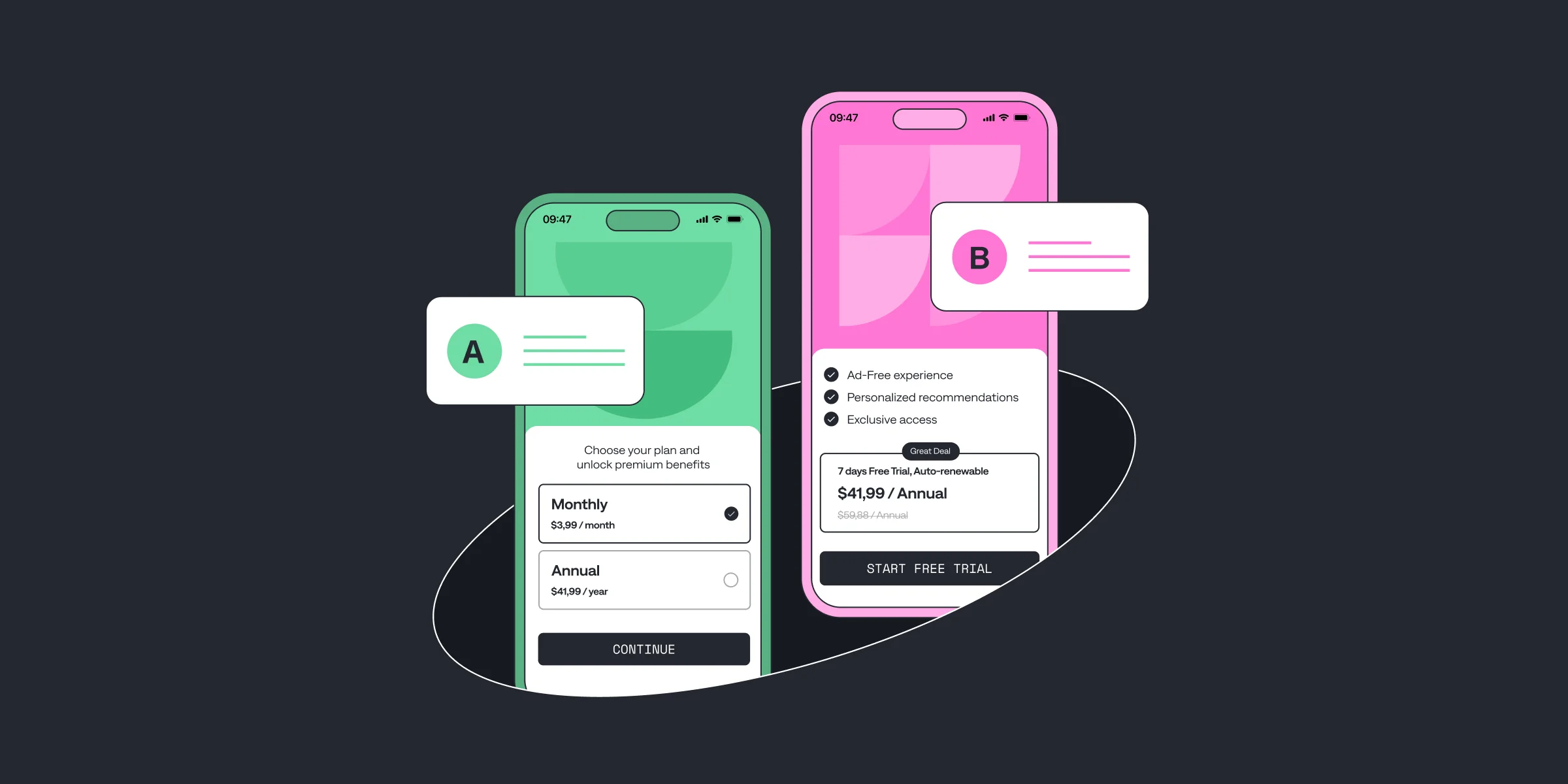
In the fiercely competitive subscription app market, standing out often requires more than just a great product – it demands continuous optimization. That’s where A/B testing comes into play. But when is the right time to start? How can app developers and marketers leverage A/B testing to drive revenue and retention?In a recent webinar, Lucas Moscon, an expert in app growth and builder of Appstack, and Sam Mejlumian, CEO of Qonversion, unpacked these questions. With years of experience scaling subscription apps and a proven track record in subscription optimization, Lucas and Sam shared actionable strategies that can transform how you approach app growth.This blog covers key highlights from their discussion and shows how A/B testing can be a game-changing tool for subscription apps. To dive deeper, don’t miss the full webinar recording.
When to Start A/B Testing?
For app developers new to A/B testing, a common question is when to start and what preconditions need to be met for effective testing. The primary goal of A/B testing is often to generate more revenue, but it’s crucial to begin only when you can achieve statistically significant results within a reasonable timeframe, ideally 2-3 weeks, without risking too much during that period.
When you're just starting out with app growth strategies, it’s a good idea to dip your toes into A/B testing—not necessarily to achieve massive results right away, but to understand the process, the tools you'll need, and how it all works.
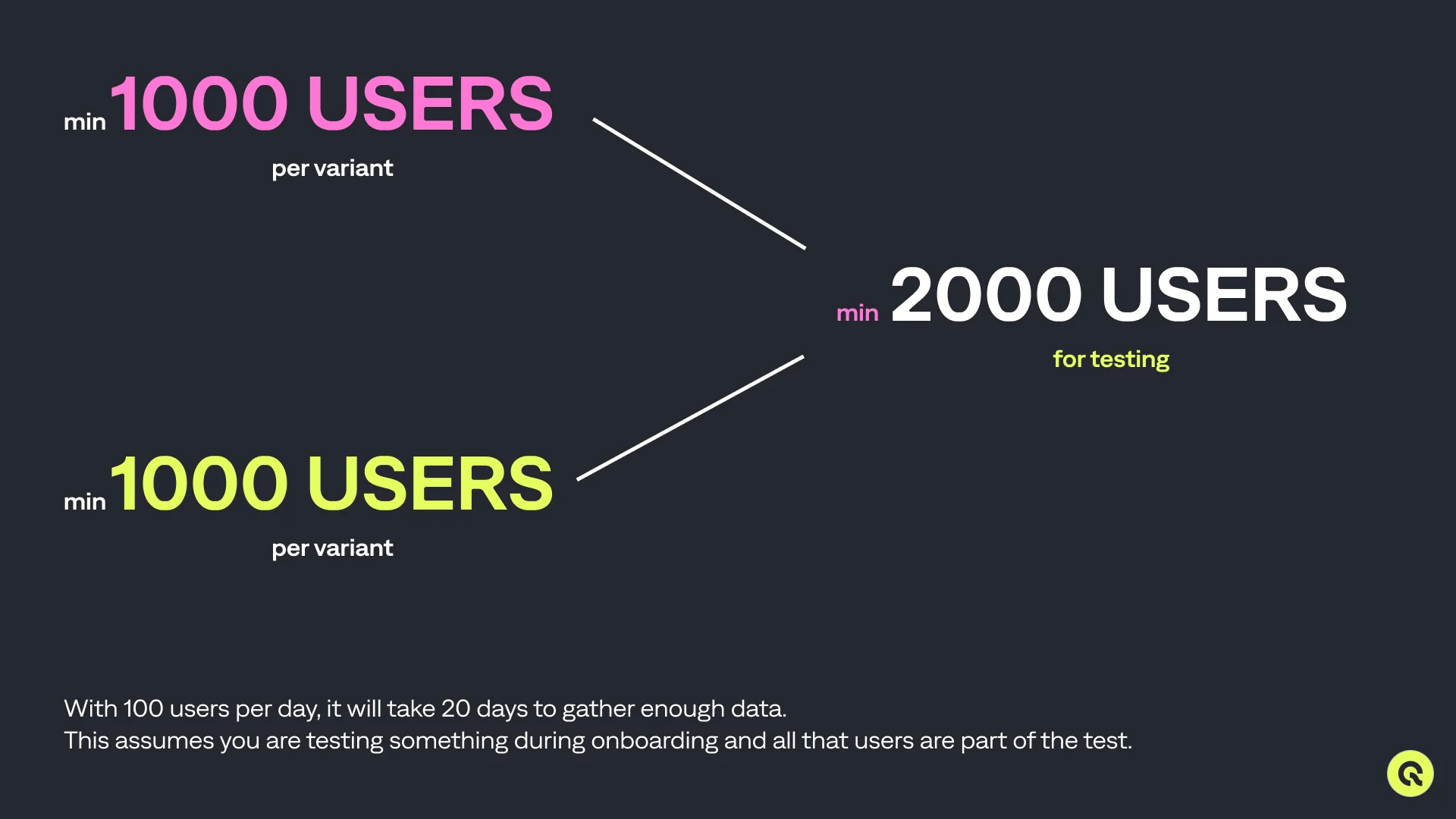
*"A/B testing is a tool, not a magical growth strategy. It’s most impactful when you have the infrastructure and audience size to support it" Sam emphasized.*But what’s statistical significance? For how long should you run the experiment and how many users do you need? There’s a benchmark of 1000 user per variant, making 100 users per day for 20 days to achieve meaningful and trustworthy results on your test. Of course, it’s relative and may change from app to app but it’s a good starting point. Even if your user base is small, we encourage you to try: running a few simple tests is a great learning experience.
For early-stage apps still investing in ads and struggling to achieve profitability, jumping into hypothesis-driven A/B testing — often modeled after the processes of larger companies — may not be the best approach. Big companies can afford lengthy research cycles, hypothesis generation, and testing, even if the results ultimately fail. However, smaller teams, especially startups with limited resources, should instead focus on making sharp, bold product decisions and iterating quickly. Even if you invest time and resources into paywall A/B testing, users will not convert if the onboarding flow is not seamless or the product-market fit is unclear.
In the early stages, monitoring competitors, tracking their progress, and drawing inspiration from their product updates is often more productive than spending time on resource-intensive A/B tests.
Here’s when it makes sense to start:
- Your app is mature: You’ve achieved product-market fit and have a steady flow of users.
- Your company is scaling: We’re not talking about rapid growth and lots of revenue, necessarily. But you need a team and resources to conduct tests effectively.
- You can achieve statistical significance quickly: With at least 1,000 users per test variant, results become reliable.
When not to A/B Test:
- Early-stage apps: If you’re still ironing out UX issues or building a user base, prioritize product fixes and bold experiments without A/B testing.
- Small audience: Without enough users, tests may yield inconclusive results.
- Unclear metrics: Focus on defining your KPIs (e.g., conversion, churn, or retention) before testing.
Metrics That Matter for App A/B Testing
To measure the success of A/B tests, both Lucas and Sam recommend focusing on key metrics that directly reflect app performance:
Revenue Metrics:
- Monthly Recurring Revenue (MRR)
- Average Revenue Per User (ARPU)
Conversion Rates:
- Trial-to-paid
- Install-to-paid
Retention and Churn:
- Monitor retention rates alongside churn to identify hidden growth bottlenecks.
>
"Conversion rates are not the end goal – they’re just a proxy for revenue," Lucas reminded. “Retaining users is equally critical.”
A/B Testing Ideas for Subscription Apps
1. Onboarding Flow Tweaks
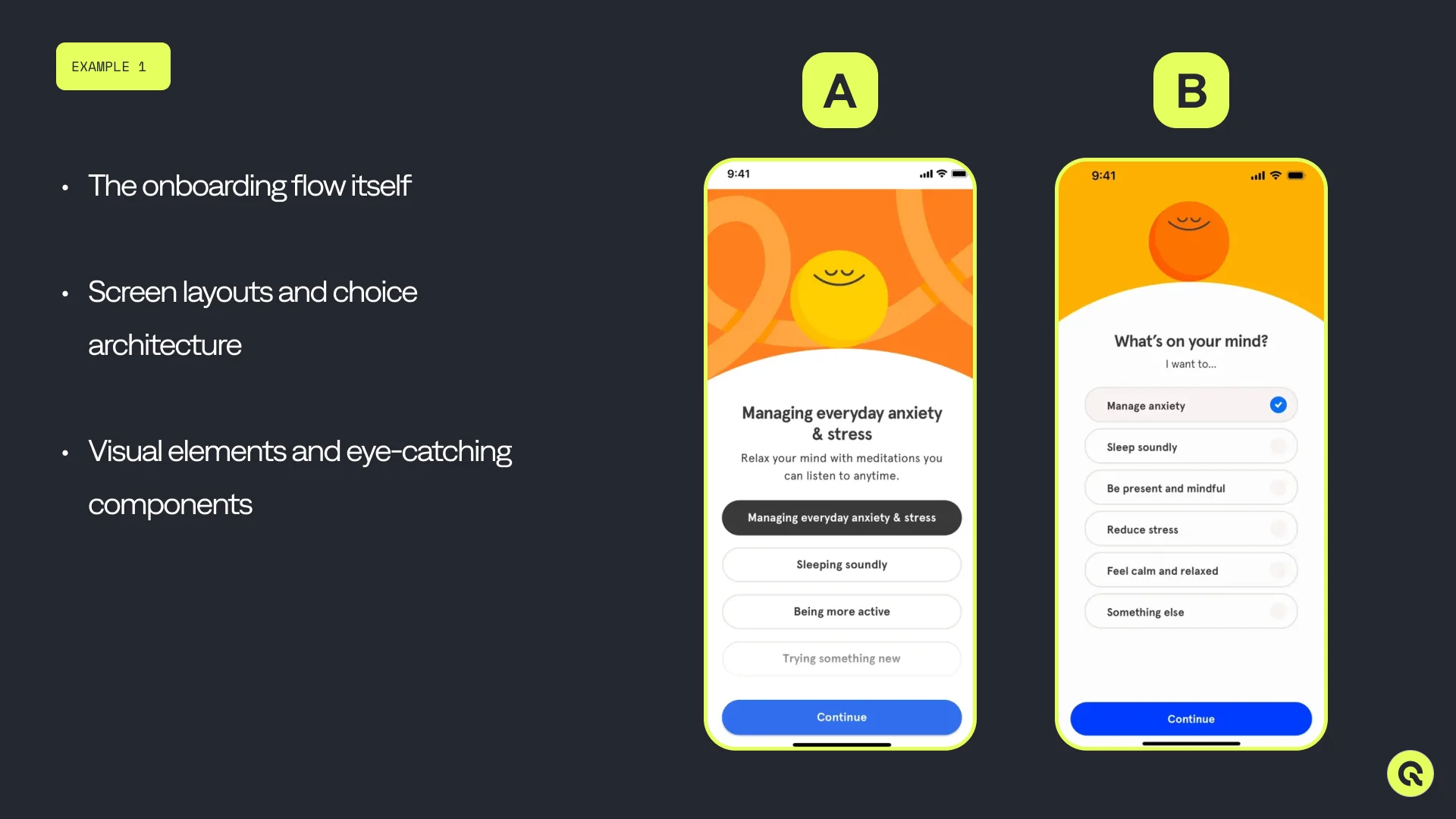
The onboarding experience sets the tone for user engagement. Testing different layouts and choice architectures can significantly impact conversions.
2. Pricing Experiments
Lucas encouraged bold pricing tests:
>
"If your subscription is $20, don’t hesitate to test $40 or $50. The insights you gain may surprise you."
However, Sam advised caution for smaller apps. Pricing tests often require a solid understanding of your unit economics and enough users to achieve statistical significance.
3. Localized Offers and Discounts
Test localized offers around holidays or events to boost engagement. Apps like Duolingo use progressive discounts tailored to user behavior, driving revenue by targeting engaged users.
4. Trial Period Adjustments
Shortening trial periods from 14 to 3 days can improve cash flow without hurting conversions. Lucas explained:
>
"If you can’t deliver the ‘aha’ moment within 3 days, it’s harder to retain engagement long-term."
5. UI/UX Enhancements
Small design tweaks, like adding a “Try” button or delaying the paywall exit button by 2–3 seconds, can have a surprisingly large impact on conversion rates.
During the webinar, we shared test examples and discussed how different apps we all know achieve the big results. Headspace, for example, a meditation and mindfulness app, worked on their onboarding flow, messaging, and visual design to achieve a 10% increase in trials with Variant B. The changes seem small at first sight, yet the result is significant.
Keep a Backlog of Results for A/B Tests
One often overlooked tip is to keep a detailed backlog of your test results. Why? A test that didn’t work months ago might deliver a surprising win later, especially with small tweaks like adjusting the test's timing or location. A record of past tests can save time and spark new ideas, making it a smart habit to adopt early on.
Key Thoughts
A/B testing is a powerful tool for subscription apps — but it’s not a silver bullet. It requires the right timing, a clear understanding of your key metrics, and a commitment to experimentation. Whether you optimize onboarding, pricing, or paywalls, A/B testing allows you to make data-driven decisions that scale revenue and retention.
For a deeper dive into these strategies, including real-world success stories and actionable insights, watch the full webinar recording featuring Lucas Moscon and Sam Mejlumian.Ready to unlock your app’s growth potential? Start A/B testing today — and let the data guide you to success!

Tatev
Content Manager at Qonversion
Tatev creates content that helps mobile app developers optimize their subscription strategies.