Finding the right tools to streamline and automate your workflows is essential for staying competitive. Today, there are lots of AI automation tools, automation tools for call centers or support teams, but workflow automation and data sinchronization is still one of the most vivid painpoints for growing businesses.
While Zapier has long been a go-to platform for connecting apps and automating tasks, its limitations and costs have prompted many businesses to seek alternatives. This article presents the top Zapier alternatives, comparing features, pricing, and capabilities to help you choose the best platform for your unique needs. For app developers, product managers, and digital marketers the effective workflow automation means enhanced subscription management and free resources to focus on user acquisition and retention. Whether you're looking for complex integrations, seamless API management, or efficient data synchronization, these alternatives offer robust solutions tailored to diverse business requirements. Let’s dive in to find the best fit for your team's automation goals.
What is Zapier?
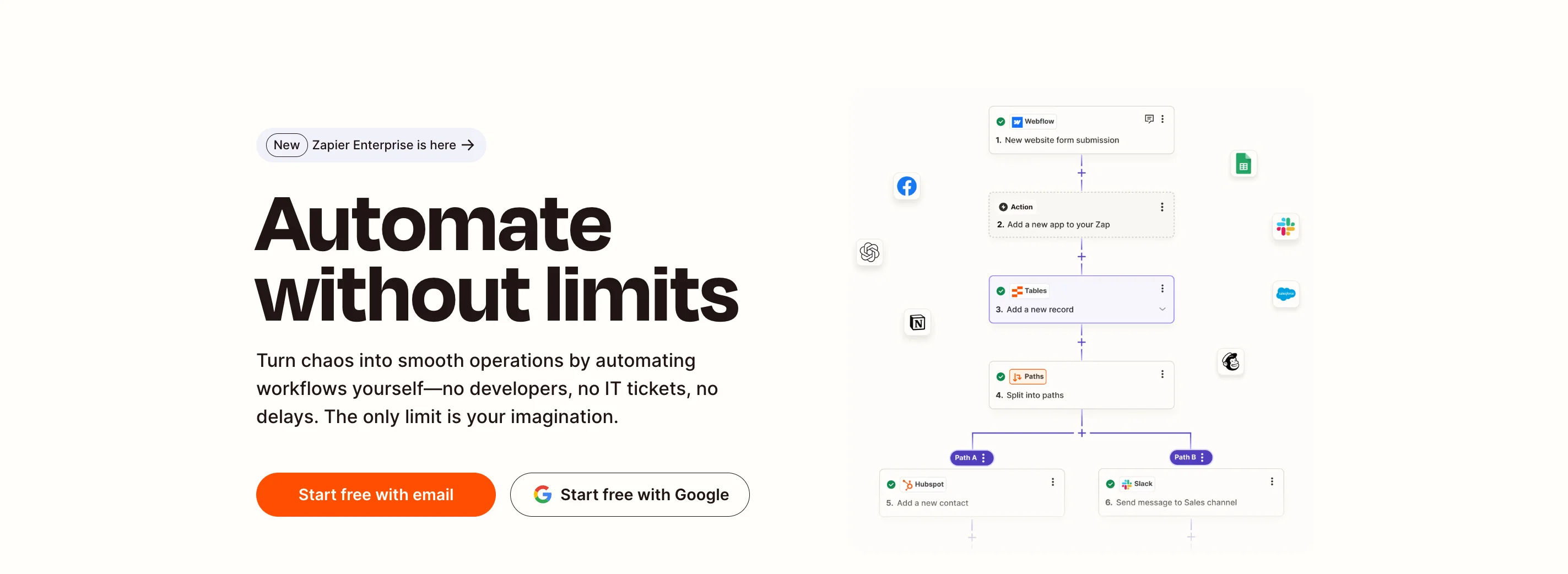
Zapier is an online platform that helps automate routine tasks by connecting different apps and services. For example, if you need to automatically save incoming Gmail emails to a Google Sheets spreadsheet or send Slack notifications for new orders on your website, Zapier enables you to set up these processes without writing any code.
What is iPaaS and what is it used for?
Originally conceived in 2011, Zapier was designed as a simple tool to help small marketing teams connect different apps and automate routine tasks. Since then, the iPaaS (Integration Platform as a Service) market has evolved significantly, and today, iPaaS is much more than just task automation. Modern Zapier alternatives have become essential tools not only for marketers and product managers but also for developers, who can now create entire ecosystems.
Here are just a few tasks that can be achieved with modern iPaaS solutions:
- Sync data between the systems you use.
- Connect your applications and create flexible automations tailored to your team’s needs.
- Moreover, iPaaS platforms enable API management and monitoring to ensure smooth interactions between services and applications.
This saves developers time, removing the need to create complex, costly, and custom integration solutions. It reduces costs and allows teams to focus on building features that deliver real value to users.
While Zapier remains a popular choice, the market offers many alternatives to address specific needs or budget considerations. In this article, we’ll explore the best alternatives depending on your needs and objectives.
Best Zapier Alternatives
- Best Zapier alternatives for complex integrations
- Best Zapier alternatives for workflow automation
- Best Zapier alternatives for API management
- Best Zapier alternatives for data synchronization
Best Zapier alternatives for complex integrations
Pipedream
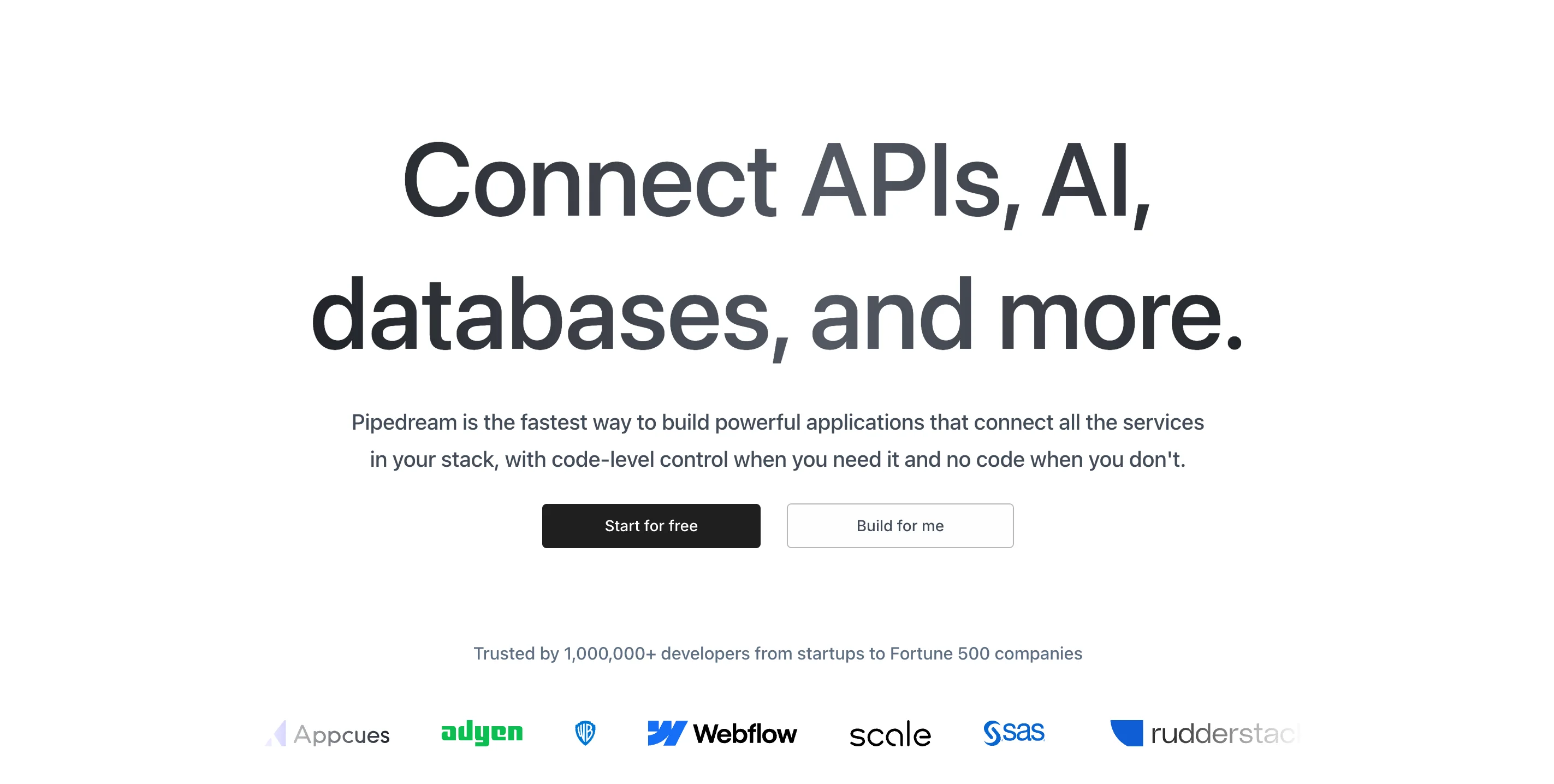
Pipedream is the best Zapier alternative for developers, offering a robust platform for integration and automation. It combines the advantages of no-code solutions with developer-level coding capabilities. With support for over 2,200 APIs, Pipedream makes it easy to configure integrations with popular SaaS applications and databases. This platform is best for those seeking flexibility and power in building custom workflows.
Of the three alternatives in this category, Pipedream is the most developer-oriented. It allows users to write and run code in the cloud, enabling developers to easily add custom APIs and create their own integrations using languages like Node.js and Python. Unlike Dell Boomi and Jitterbit, Pipedream operates on a pay-as-you-go model, making it more affordable. The only potential drawback is its lack of on-premise and local deployment support, unlike Dell Boomi and Jitterbit.
The platform offers a free plan with basic features and a recommended paid plan at $49 per month. Custom pricing is available for enterprise clients, which includes virtual private cloud support and other premium features.
Dell Boomi

Dell Boomi is the best Zapier alternative for complex integrations, enabling companies to connect both on-premise and cloud systems while supporting hybrid IT environments. With Boomi AtomSphere, organizations can easily build integration flows, manage APIs, and automate B2B and EDI processes. The platform includes master data management and event-driven flows, which is especially valuable for enterprises handling large volumes of real-time data.
Dell Boomi is the best for enterprise-level integrations, offering a comprehensive suite of tools for large organizations, including hybrid environment support (cloud and on-premises), an extensive connector library, and API management capabilities. It is generally more powerful than Pipedream and Jitterbit for big data processing tasks, making it the top choice for corporations.
However, there are some downsides. Unlike Pipedream, Boomi requires significant resources for implementation and comes with a higher budget, starting at $550 per month.
Jitterbit
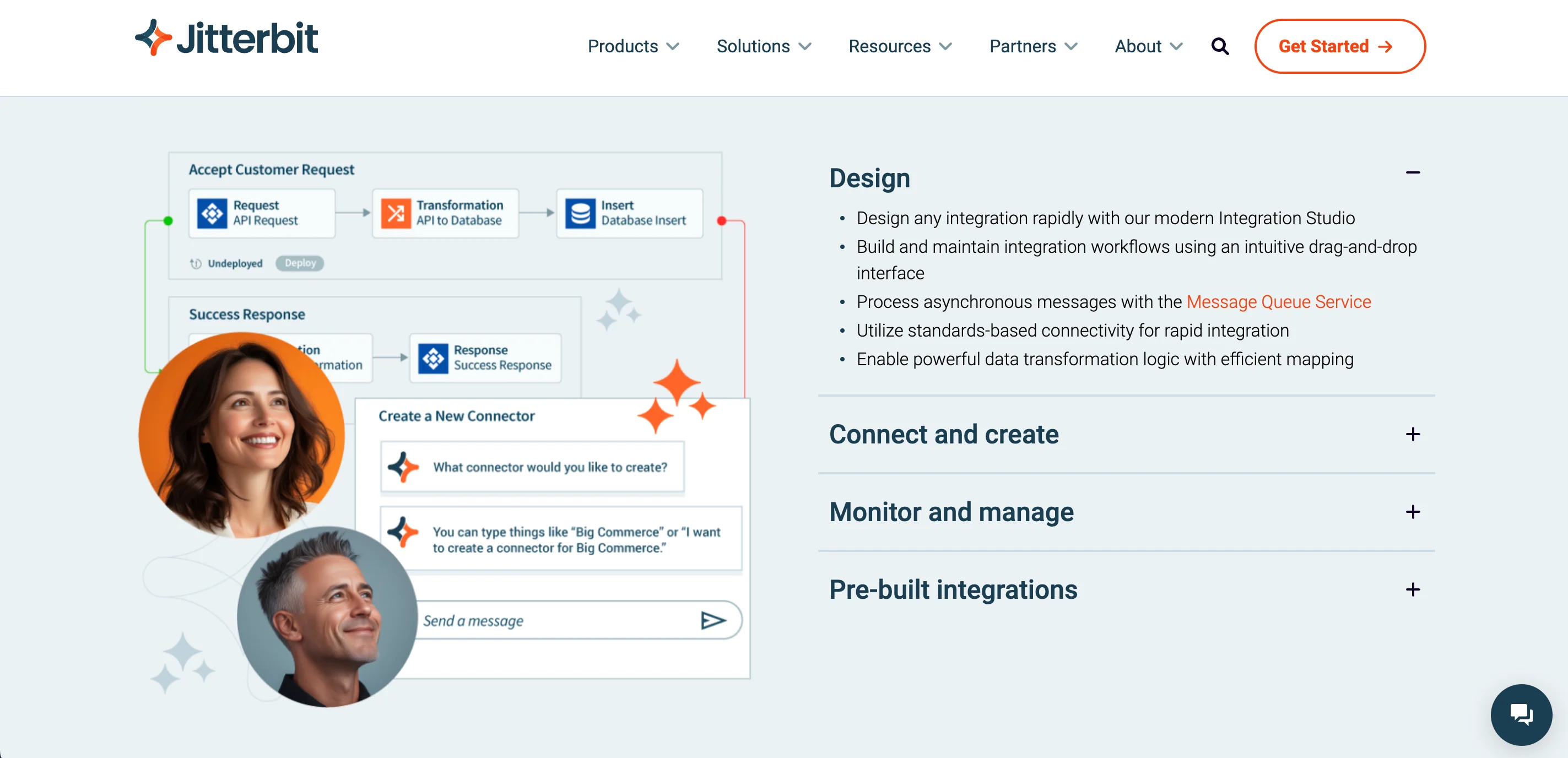
Jitterbit is the best Zapier alternative for large companies seeking a flexible and powerful automation platform with AI features. With an intuitive interface supporting AI and low-code solutions, Jitterbit enables data integration, API management, and process automation. This makes it not just an alternative but the best option for creating customized workflows that support both on-premise and cloud systems.
Among the top three Zapier alternatives for complex automations, Jitterbit is the most B2B-oriented and user-friendly. It offers a visual builder, making it easier for users to create complex workflows compared to Pipedream, and requires fewer resources and less infrastructure than Boomi. Jitterbit also includes AI tools and EDI integration, supporting both cloud and on-premise integrations, which makes it ideal for B2B and ERP systems. Pricing starts at $1,000 per month.
Best Zapier Alternatives for Workflow Automation
N8n
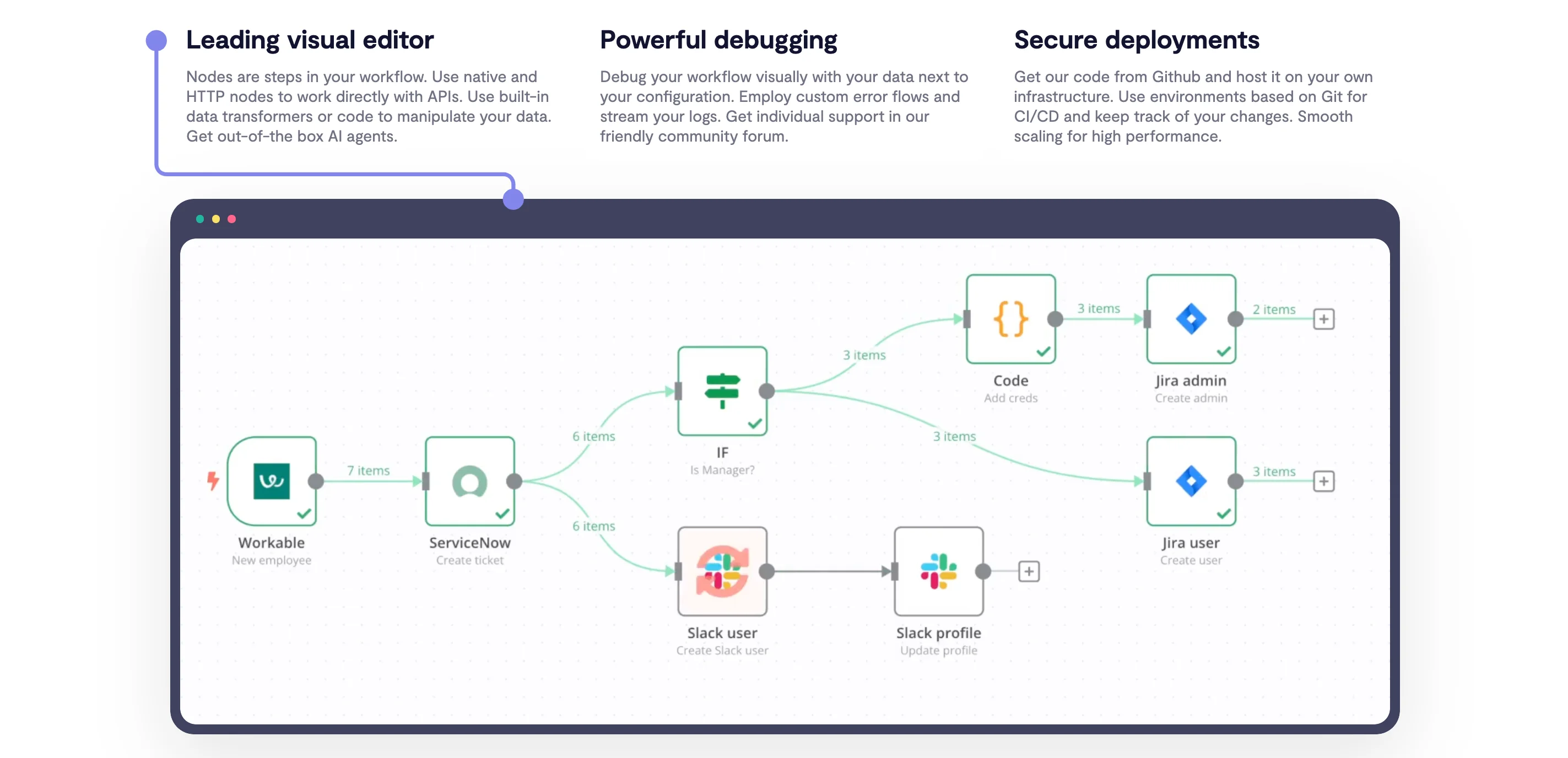
N8n is the best open-source Zapier alternative with on-premise deployment support. Using n8n’s visual, drag-and-drop, low-code interface, users can create workflows that integrate popular tools like Google Sheets, Slack, and GitHub. This makes it the best solution for those seeking a highly customizable, cloud-independent platform for building complex automation processes.
To create integrations, n8n uses a visual builder where automated workflows are created by adding “nodes.” Each node represents a trigger or action, connected by lines to create a data flow. n8n allows users to work with JSON and JavaScript and to set specific execution parameters for each workflow.
Unlike Make, Zapier, Albato, and other alternatives in this segment, n8n doesn’t count operations or “tasks” but only counts workflow executions. The starter plan with n8n-hosted service and 2,500 executions is priced at $24 per month.
Make (formerly known as Integromat)
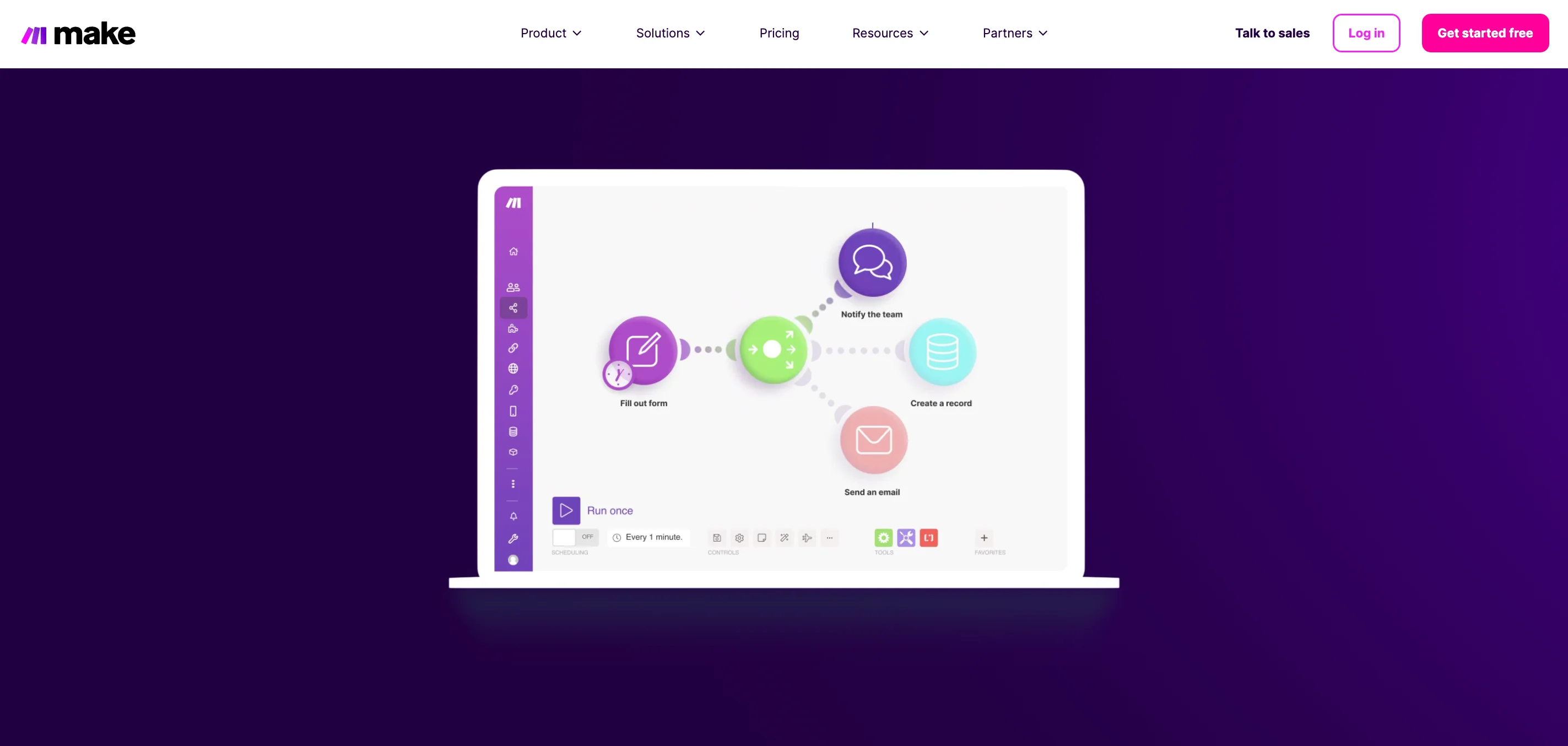
Make, formerly known as Integromat, is the best Zapier alternative for those looking for a platform that offers visual design and workflow automation. The platform provides a drag-and-drop visual interface and combines powerful tools for customizing workflows, striking a balance between complex process customization and ease of learning.
Among Zapier alternatives in the workflow automation segment, Make stands out for its visual editor, which allows users to configure highly complex, multi-step integrations with extensive branching, loops and iterations, trigger conditions, and regular expressions. Workflows are built using “modules,” with a focus on handling processes with large data volumes. While Make may not offer the same quick, responsive user support as Albato, it has a very active community.
Unlike Zapier and Albato, which only count successfully completed actions and ignore steps with tools, Make counts any data processing operation. However, it offers more generous limits. The recommended plan with 10,000 operations costs $18.80 per month.
Albato
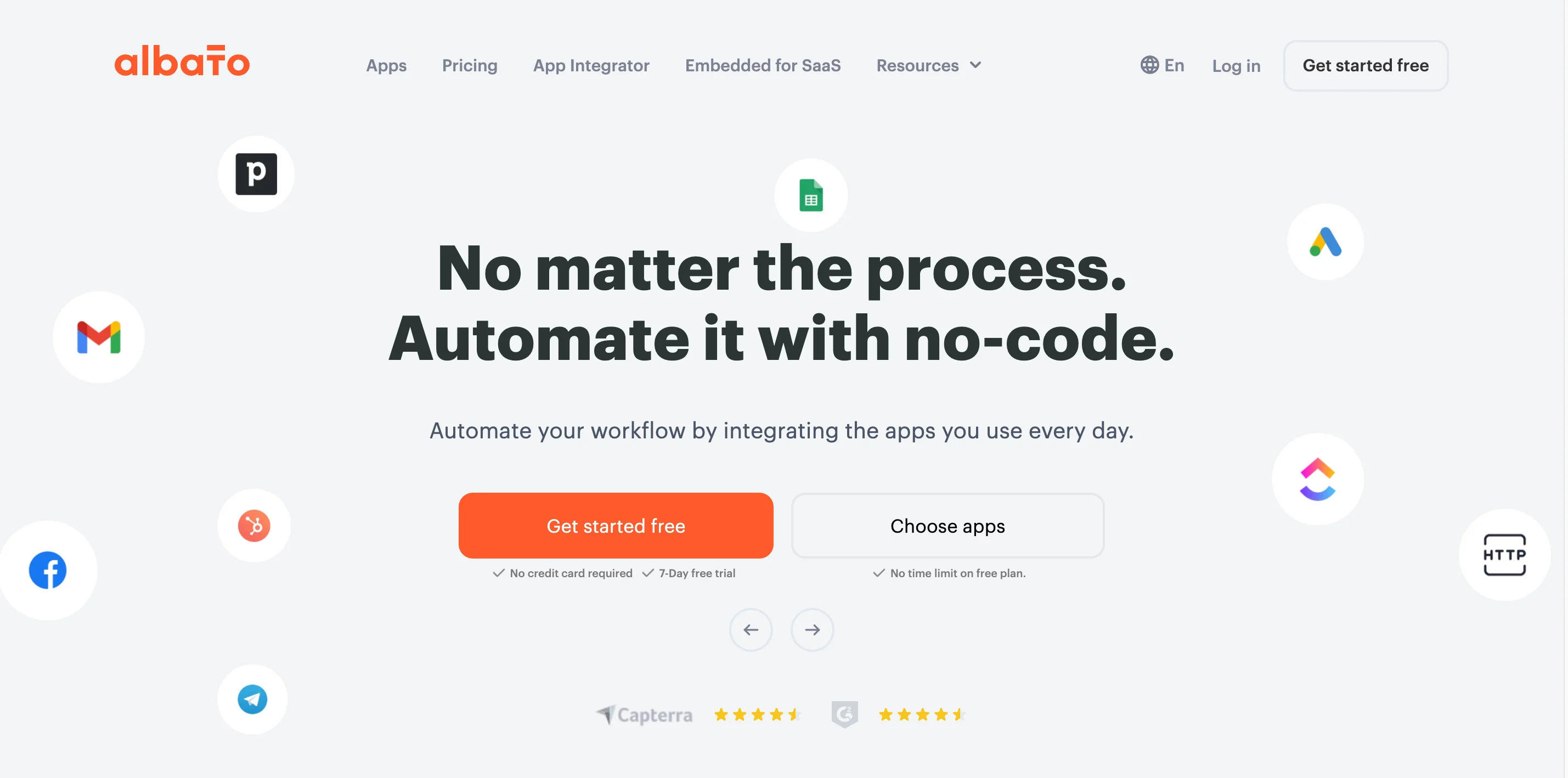
Albato is the best Zapier alternative if you're looking for similar functionality and a comparable workflow structure at an affordable price, with high-level customer service and support. Albato features an automation builder interface with blocks for triggers and actions. The platform supports data filters, routing, custom code, custom API requests, multiple data processing tools, and a library of over 800 apps.
A standout advantage of Albato in the Zapier alternatives segment, especially at an affordable price point, is its App Integrator feature. Available from the trial period, App Integrator allows you to add any app (including your own) to Albato’s integration list. Combined with Albato Embedded—which supports white-label customization and quick deployment of integration marketplaces—this makes Albato the best Zapier alternative for SaaS application owners.
The basic plan, which includes nearly all Albato features and responsive live chat support, costs $19 for monthly billing and $13 per month for annual billing.
Best Zapier Alternatives for API Management
MuleSoft Anypoint
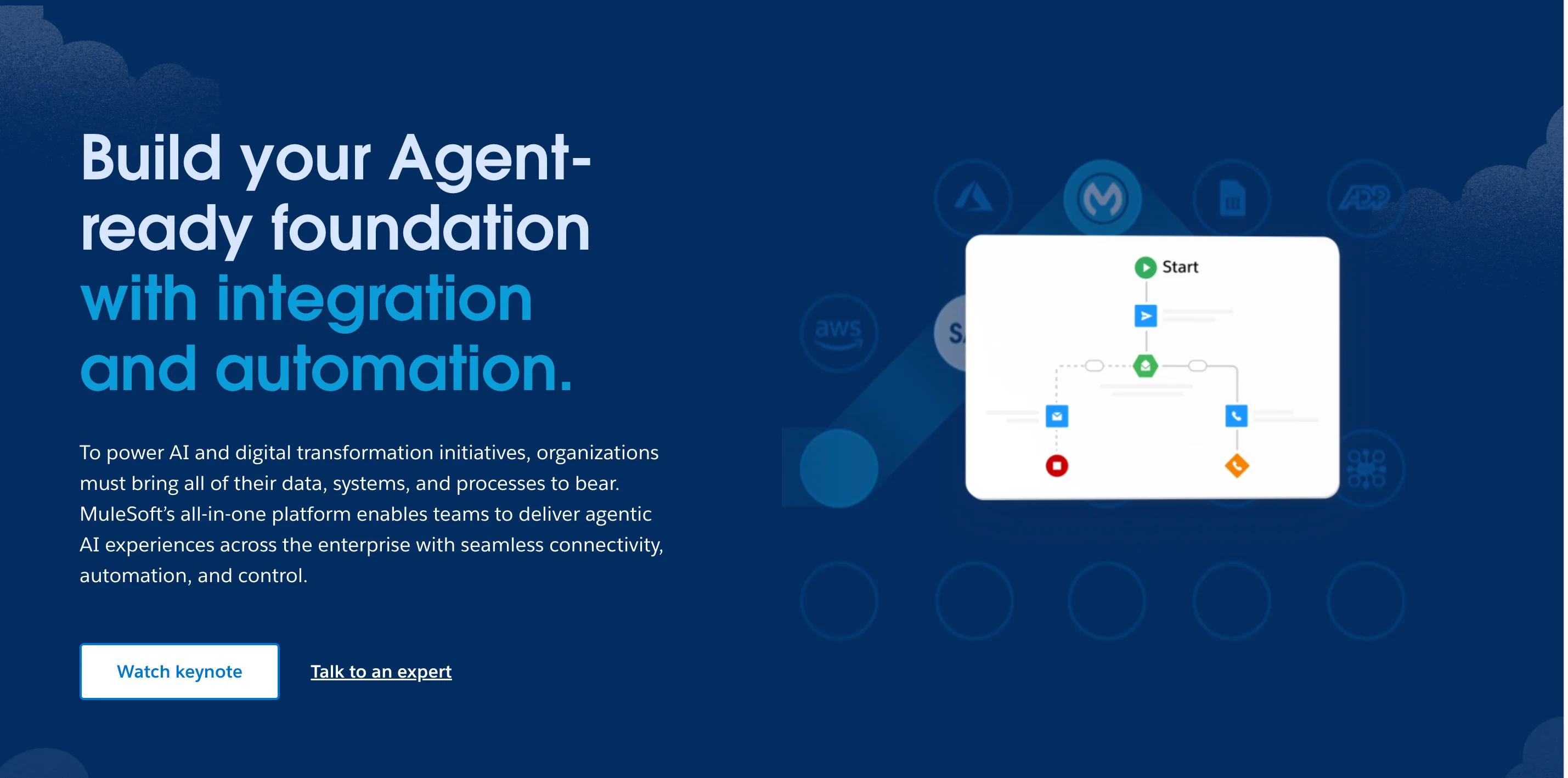
MuleSoft Anypoint is the best Zapier alternative for API integration, combining API management, integration, and automation for large enterprises. MuleSoft is a scalable and flexible platform that enables IT teams to deploy and monitor APIs, ensuring quality and security at every stage from development to deployment.
Among the top three Zapier alternatives for API management and monitoring (Workato, Tray.io, and Anypoint), MuleSoft Anypoint is one of the most scalable. Known for its three-layer API architecture and deep enterprise-level integration, MuleSoft Anypoint merges iPaaS functions with an Enterprise Service Bus (ESB), giving teams full control over API-driven processes. This platform is the best for organizations with stringent security and data privacy requirements, as well as those needing complex integrations between cloud and on-premise systems.
MuleSoft is the most expensive of the three Zapier alternatives in this category, but it delivers robust capabilities suited to large-scale operations.
Workato
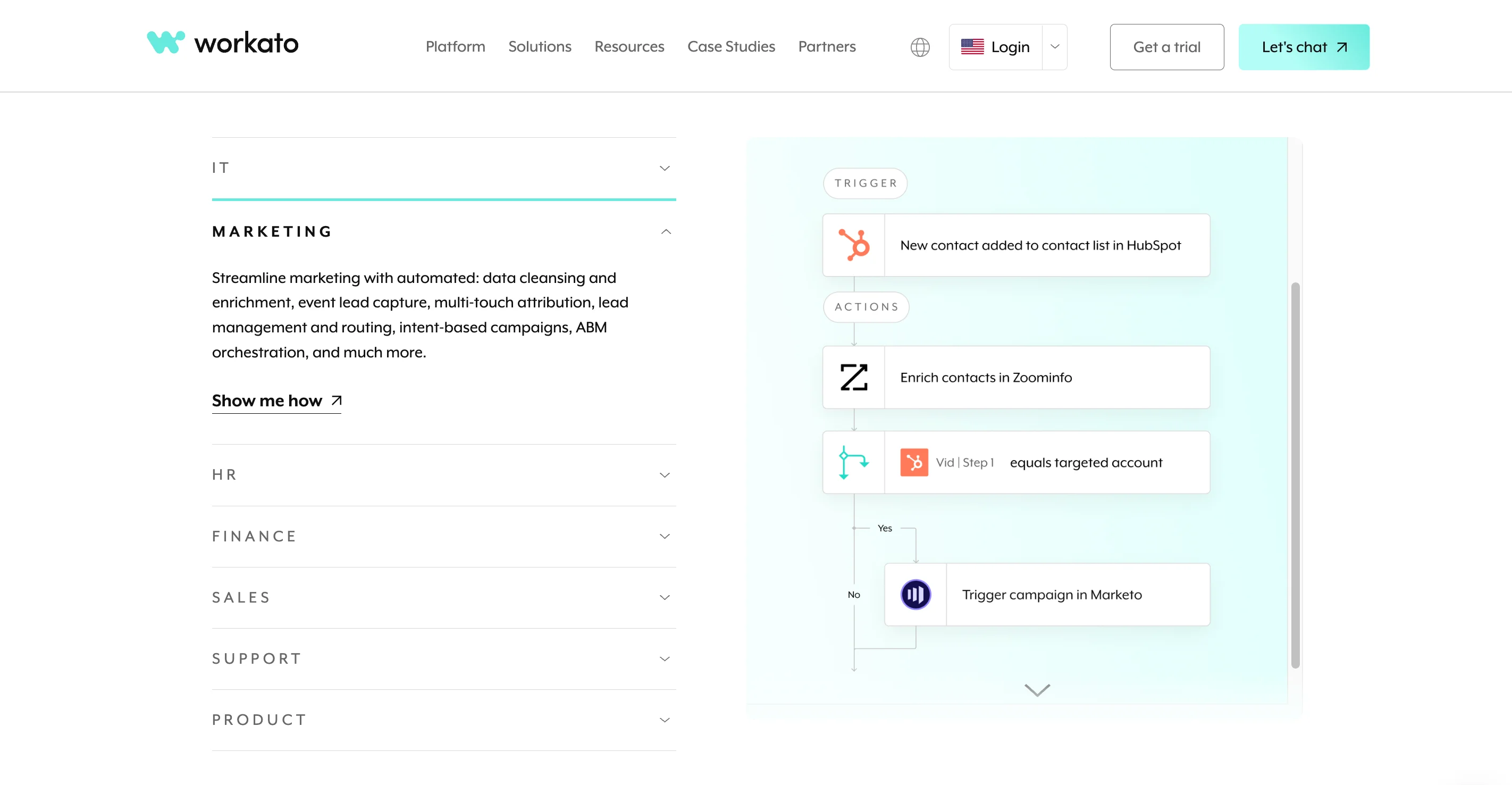
Workato is the best Zapier alternative, combining a low-code interface with automation capabilities and built-in analytics with API monitoring. Workato's security tools and API gateway make it the best choice for companies that need powerful solutions with developer-friendly management.
Workato is recognized as a more advanced platform compared to Tray.io, with extended automation support, strong chatbot capabilities, and an on-premises agent for enterprise use. Additionally, among the three best Zapier alternatives in this category, Workato arguably offers the most intuitive administration and high efficiency for teams managing APIs.
Workato’s pricing typically ranges from $15,000 to $50,000 per year, depending on factors like task volume, number of integrations, and specific workspace requirements. The pricing structure includes two main components: a "workspace" plan and additional "task" units as needed.
Tray.io
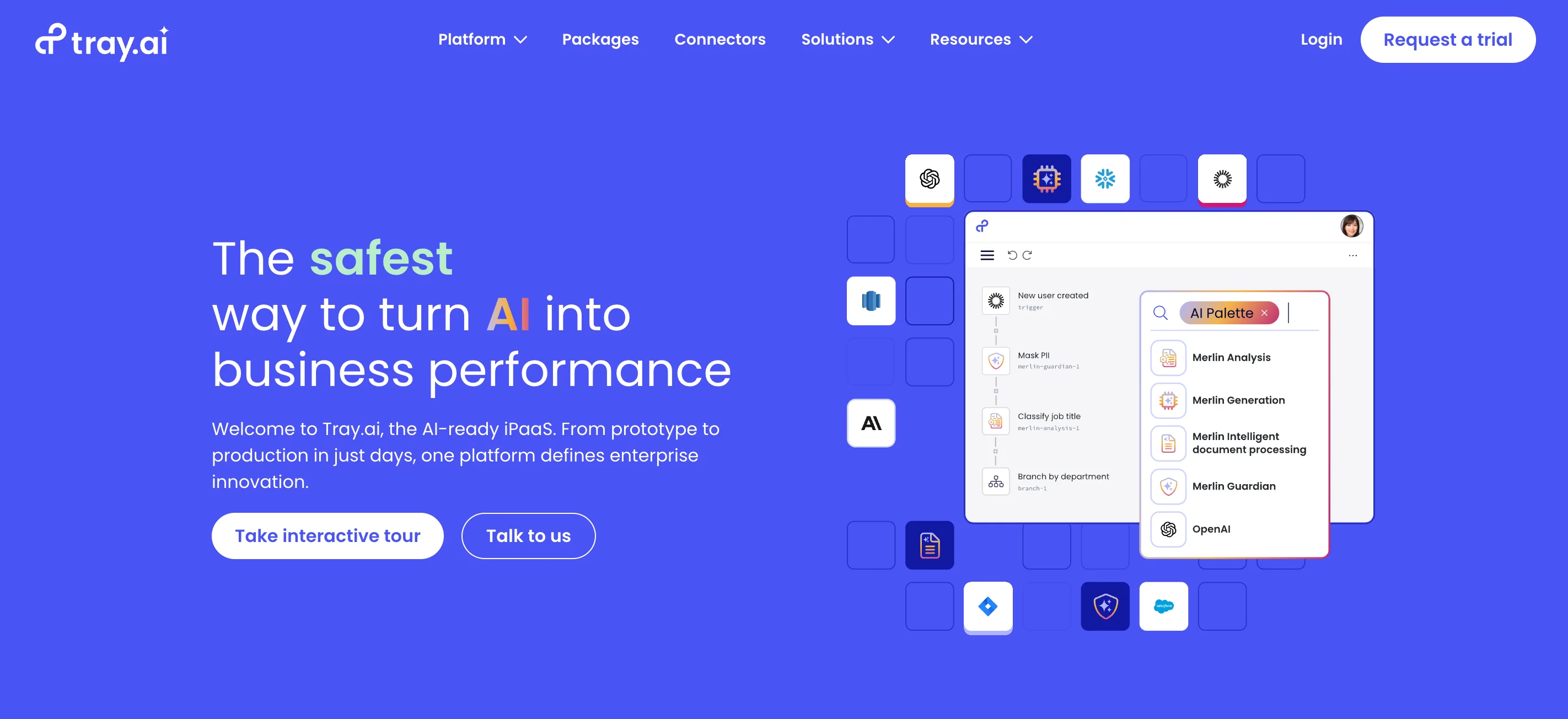
Tray.io is another best Zapier alternative for API management and monitoring, providing scalability through its serverless architecture. Unlike Workato and MuleSoft Anypoint, Tray.io offers a more accessible subscription cost and stands out with its Merlin AI. Tray.io enables business and technical teams to collaborate effectively, automating API development, optimizing performance, and clarifying the business logic of each workflow stage. This AI support simplifies microservices management and enhances ease of use.
Tray.io is the best option for companies satisfied with cloud-to-cloud integrations. However, it does not support on-premise deployments, which may be a limitation for companies with strict security requirements. Of the three best Zapier alternatives in this category, Tray.io is the most visually oriented, emphasizing an intuitive process editor that appeals not only to large organizations but also to mid-sized businesses.
Tray.io subscriptions start at $500 per month for basic plans, with final pricing dependent on task volume, number of integrations, and specific platform usage.
Best Zapier Alternatives for Data Synchronization
Parabola
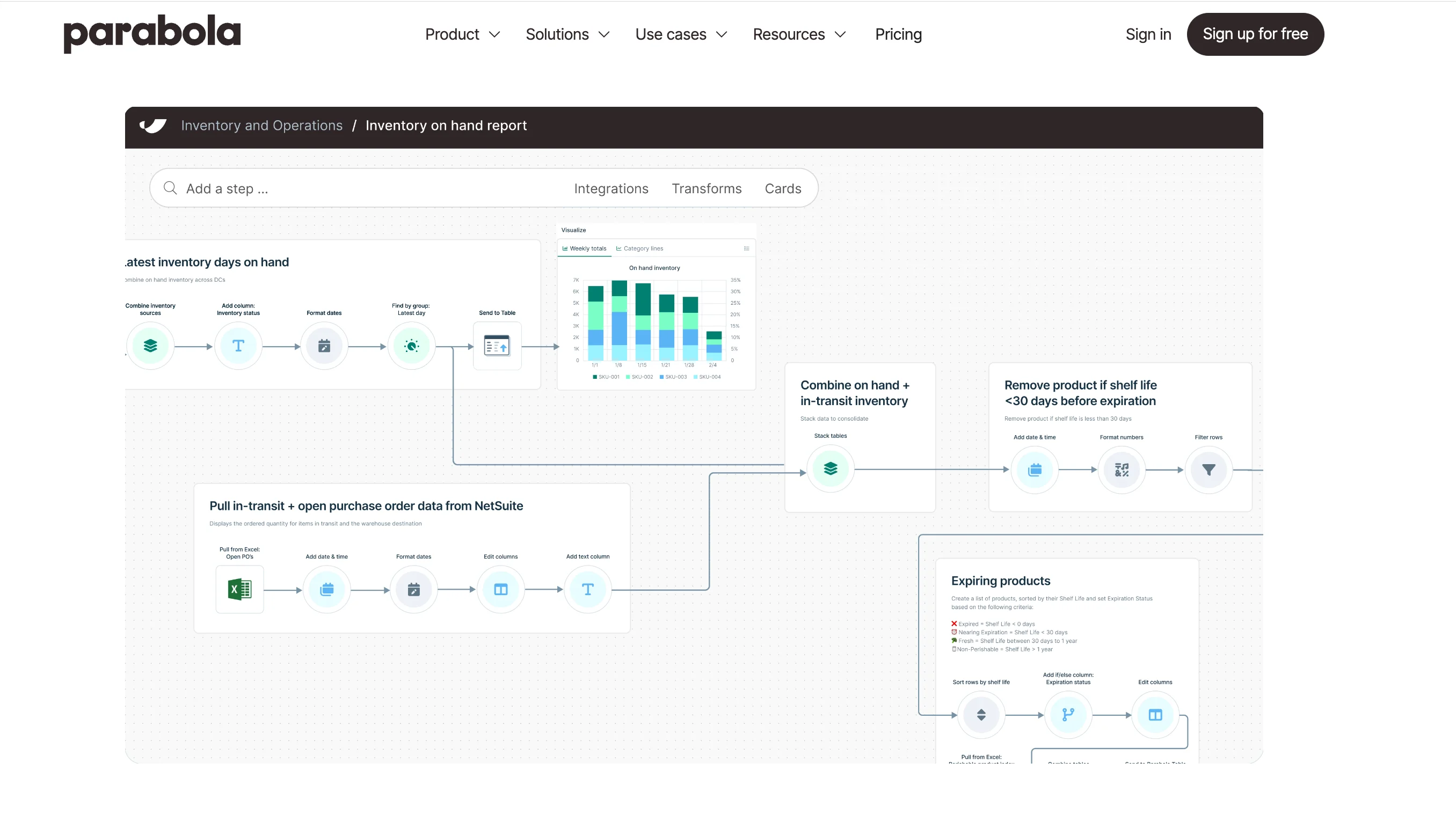
Parabola is the best Zapier alternative for data synchronization, offering robust data transformation capabilities without requiring coding. Parabola is the best solution for application developers in sectors like logistics, e-commerce, and SaaS, allowing easy data aggregation from various sources, including spreadsheets, files, APIs, and CRM systems.
In Parabola, you can create a “flow” (process) using blocks, with each block performing a specific action. For example, a step might involve filtering, formatting, sending, or loading data from different sources. Supported sources include spreadsheets, APIs, and cloud services. Compared to Celigo, Parabola is less suited for complex, continuous data synchronization scenarios requiring API management.
Unlike Zapier, Parabola does not count “tasks” but imposes limits on the number of flows and steps within each. The recommended Solo plan costs $80 per month.
Celigo
Celigo is another best Zapier alternative for data synchronization. Celigo keeps data up-to-date across systems with flexible scheduling and real-time synchronization, making it the best choice for applications that handle large data volumes, such as CRM and ERP systems, or e-commerce platforms.
Celigo operates on its integrator.io platform. When creating an integration, users start by selecting the data source and destination, then add steps in the Flow Builder to configure data transfers between applications. The Flow Builder allows you to export data from one system, process it, and import it into another. Unlike other alternatives in this segment, Celigo supports bidirectional synchronization.
The Standard plan starts at $7,200 per year and includes three integrations with access to core features.
Conclusion
The world of iPaaS has long moved beyond the simple "Zaps" of Zapier, offering a full arsenal of platforms, each designed to meet specific business needs, task requirements, and budgets. There is no single "best" alternative to Zapier; the right choice depends on your specific tasks, their complexity, your budget, and your company’s technical infrastructure.
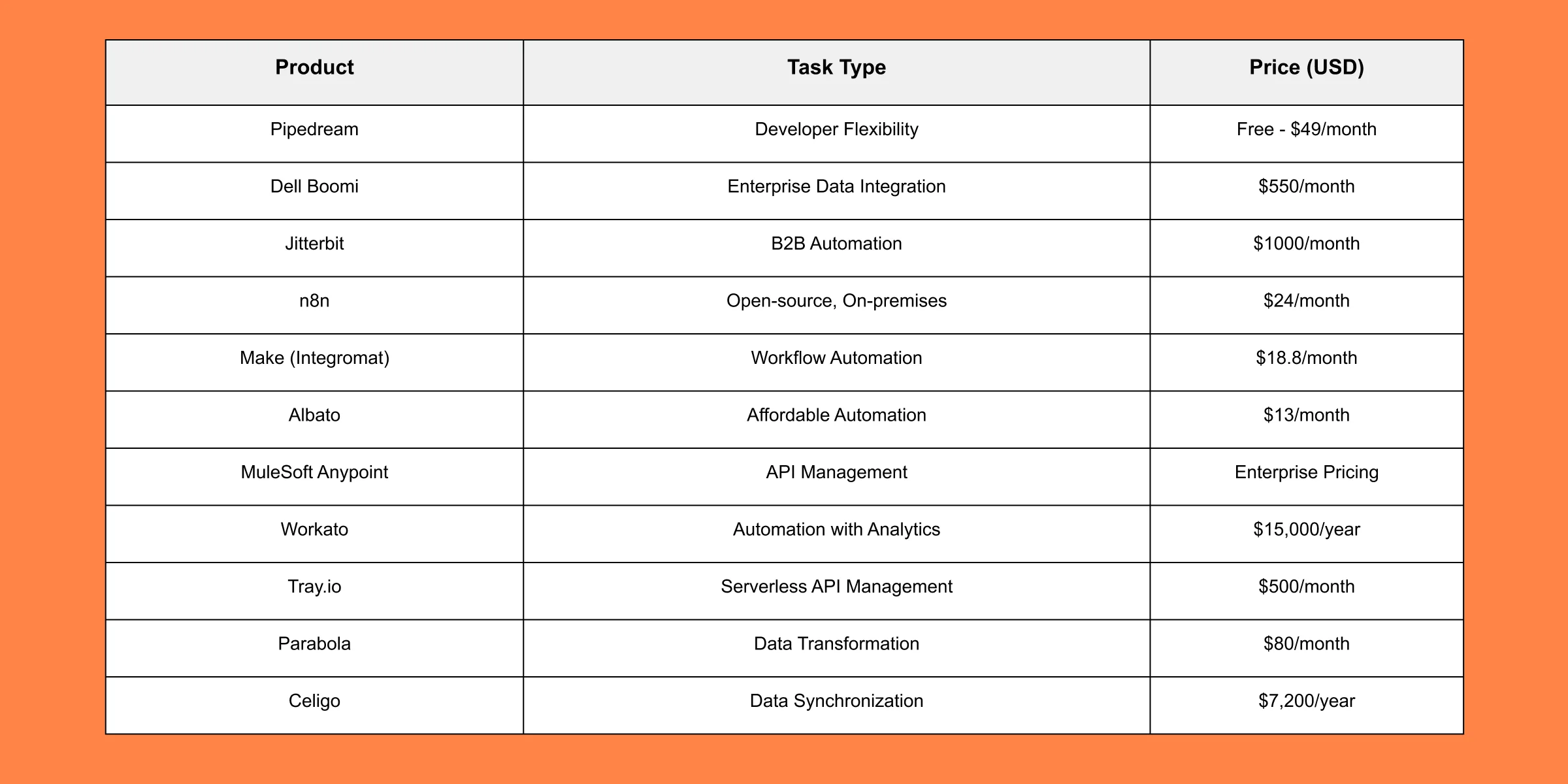
Zapier Alternatives: Pricing and task types

Tatev
Content Manager at Qonversion
Tatev creates content that helps mobile app developers optimize their subscription strategies.