The mobile app ecosystem is changing, and it’s not just another iOS update. With the ongoing Apple vs. Epic legal saga cracking open Apple's App Store model, developers are facing one big question: Should you stay on Apple’s rails or jump into the open waters of third-party payments?
In a recent roundtable, Qonversion CEO Sam Mejlumyan was joined by Vitaliy Urban (CEO of Moonly), Alexander Zimin (co-founder of EDA), and Qonversion's BDE Nick Lazarev to untangle the implications of this seismic shift.
Lower Taxes, Higher Responsibility
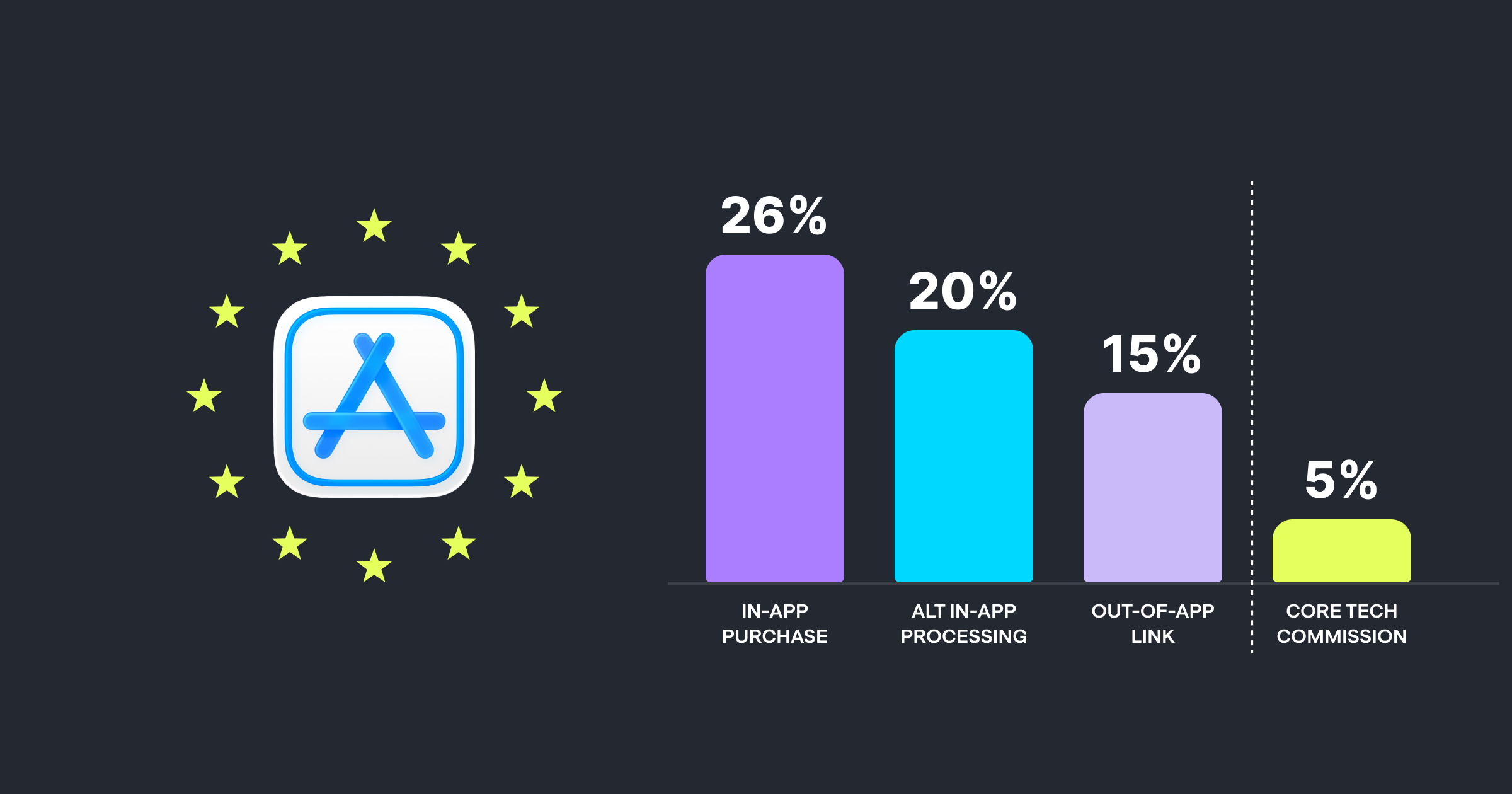
A major win from this legal showdown? Developers may now reduce Apple’s infamous 15%-30% cut by integrating third-party payment systems. Sounds like a victory, right?
"It sounds great until you realize managing disputes, chargebacks, and taxes is on you," Sam pointed out. For apps in Apple’s Small Business Program, that 15% might still be the simpler option, at least until you scale past $1M ARR.
The Churn Challenge
Let’s talk churn, because the grass isn’t always greener off-platform. Alexander recalled the 2018-2019 wave of apps tricking users into subscriptions, a tactic that forced Apple to implement unsubscribe prompts during app deletion. Now, with web-based payments, the same confusion is back. Users might think deleting the app cancels their subscription. Spoiler: it doesn’t.
Vitaliy added that managing subscriptions yourself also means it’s on you to ensure users can find the cancel button. "If they can’t, they complain to Apple’s support anyway, and Apple still might charge you."
Conversion & Trust
Another question: Will users trust a web-based paywall enough to enter their card details? "Apple Pay is seamless," Vitaliy noted. "And if Apple bans it outside their system, that could hurt conversion rates. That would be a strict yet effective move from their side."
Sam brought up Stripe’s "Link" feature, a decent alternative that stores user payment details. Not quite Apple Pay, but it helps.
User Privacy vs. Attribution Goldmine
While Apple shields user data, Sam highlighted that third-party systems give you back attribution visibility. That’s a big plus for developers who want to understand and optimize user journeys.
Web-to-App Funnels: A Quiet Revolution
Alexander mentioned a growing trend that might get even bigger: driving users to a web onboarding flow before prompting app installs. These flows handle payments and education upfront, giving apps a head start on retention.
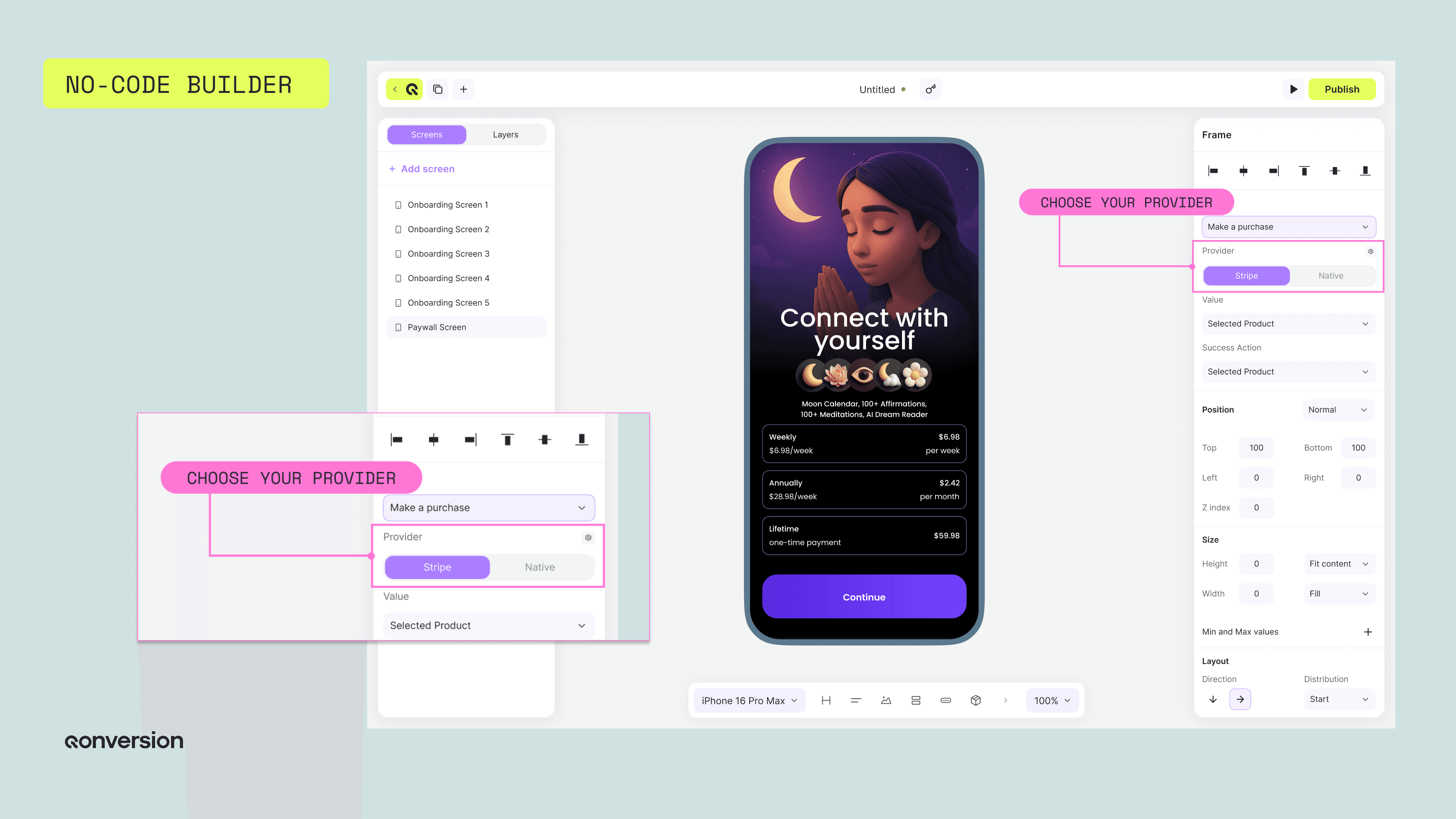
Qonversion’s no-code paywall builder makes this process even faster — letting you design, test, and launch onboarding and paywall experiences without writing a single line of code.
Apple’s Response: Strategic Innovation
"To every lost lawsuit, Apple responds with innovation," Alexander noted. The Small Business Program was born from litigation, and we can expect more moves that look like developer-friendly policies but keep Apple firmly in control.
As for timing, everyone agreed: Change is coming, but not fast. "Let the dust settle," Vitaliy advised. "Watch what the big players do."
The Developer Takeaway
Ultimately, this shift is about choice but with that choice comes complexity. As Sam summed it up: "Qonversion and others need to provide the infrastructure to handle both native and web-based subscription models."
It's an exciting time. A bit chaotic, sure, but also filled with opportunities. If you’re focused on building a great app and growing revenue, keep your eyes on the horizon and your tech stack flexible.
🎥 Watch the full roundtable discussion to hear more insights directly from our experts.

Tatev
Content Manager at Qonversion
Tatev creates content that helps mobile app developers optimize their subscription strategies.