Introduction to IDFA
Definition: The Identifier for Advertisers (IDFA) is a unique ID assigned to every iPhone.
- Usage: Attribution platforms like AppsFlyer, Adjust, Singular, Kochava, and major marketing platforms use IDFA to attribute app installs to advertising campaigns.
- Example: Facebook saves the IDFA of your device when you see an app ad on Instagram. After you install and launch the app, the Facebook SDK saves the IDFA again and matches it with the one saved from the Instagram ad. This process helps Facebook Ads gather data on installs and in-app events for each ad set and creative.
Market Overview
Mobile apps advertising is a huge market. AppsFlyer estimates it at almost $80B in 2019 and forecasts it to grow to $120B in 2022. The large share of the market is the advertising of iOS apps. But with the changes to IDFA accessibility announced during Apple’s annual WWDC conference in June 2020, this industry might experience a significant setback.
Changes Announced by Apple
An app will have to explicitly ask user permission to get the IDFA in Apple’s new iOS 14 that will become the default OS for all iPhones this fall. Developers will have to use the AppTrackingTransparency framework for that.
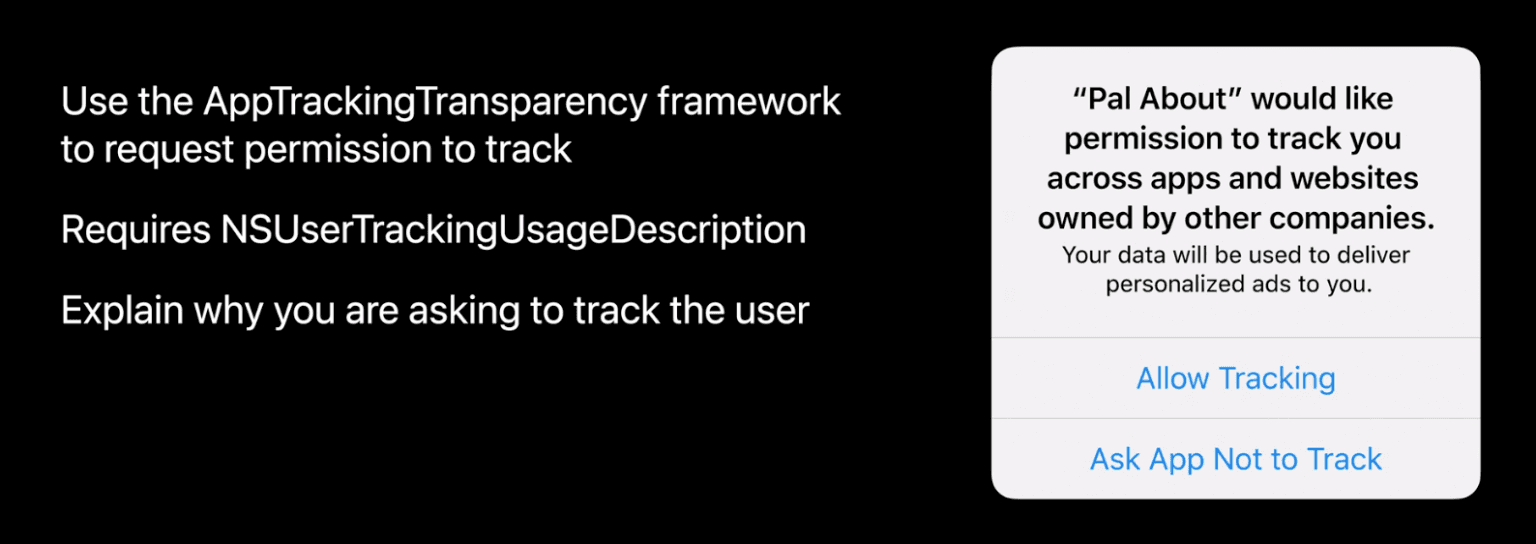
AppTrackingTransparency Framework iOS 14 (iOS IDFA pop up flow)
Current vs. New Approach
This approach is entirely different from the current one. A user does not need to give his consent for he’s IDFA tracking in iOS 13. Any iPhone user can switch off IDFA tracking in he’s privacy settings («Reset Advertising ID» toggle in Settings > Privacy > Advertising). But only 15% of users do that based on AppsFlyer estimate.
Impact on Mobile Attribution
This number can jump above 70% with opt-in notification for every app in the new iOS 14. This will make IDFA next to useless for mobile attribution. And the efficiency of ad campaigns without accurate attribution data might drop significantly. The chances are that neither Facebook and Google nor attribution platforms like Appsflyer and Adjust are happy with such changes.
Apple's Proposed Solution
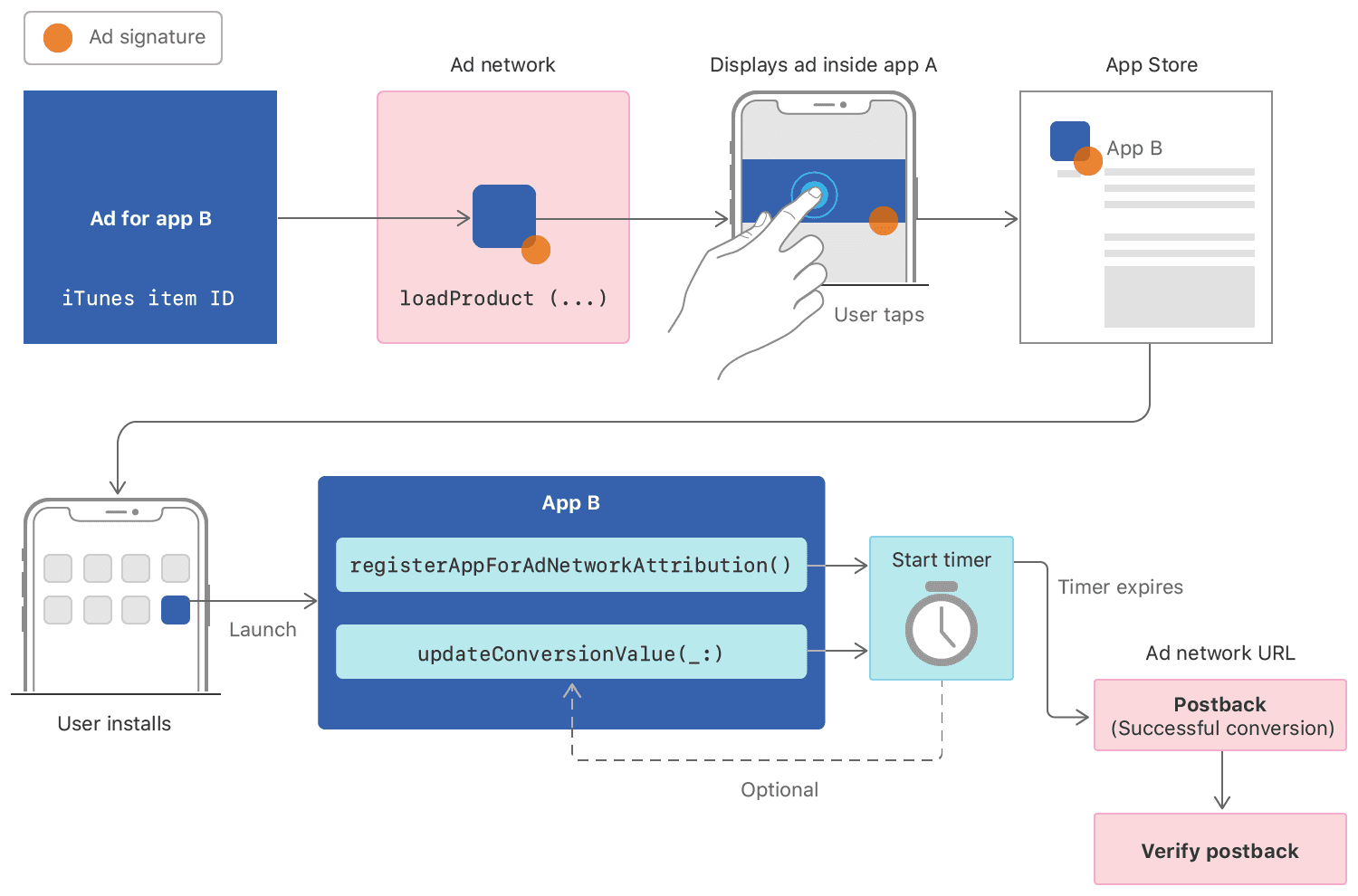
Of course, Apple has offered a potential solution. Apple recommends to use it’s SKAdNetwork for attribution and is going to develop and update it. Here is the diagram that shows how it works. It allows attributing both installs and in-app events without identifying the exact device and so it looks like a more privacy-conscious solution.
Alternative Solutions
Adjust published its own review of the situation and what could be the possible solutions. Among the available options besides SKAdNetwork there are the following:
- Fingerprinting. The set of device unique configurations is used to match a user. This method is already widely used by the majority of attribution platforms to improve attribution accuracy.
- Motivating users in the app to allow IDFA tracking. This method might be considered inappropriate by Apple.
- Apple might introduce install referrer similar to Google Play Install Referrer to send attribution data through API directly from App Store.
Future Expectations
In the months to come, we can expect to see a number of updates both from advertising and attribution platforms. Indie developers and medium-sized apps have been flourishing in recent years due to very effective advertising campaigns on Facebook and Google. We really want to believe that no matter what solution will be used for attribution starting from iOS 14, the small and medium app companies will still have effective advertising tools to compete with large corporations in mobile user acquisition.

Michael
CEO at Qonversion
Michael leads Qonversion with a vision to help mobile apps maximize their subscription revenue.