As the mobile app market continues to grow, more and more people are getting involved in the industry, creating new apps as well as buying or selling sustainable app businesses.
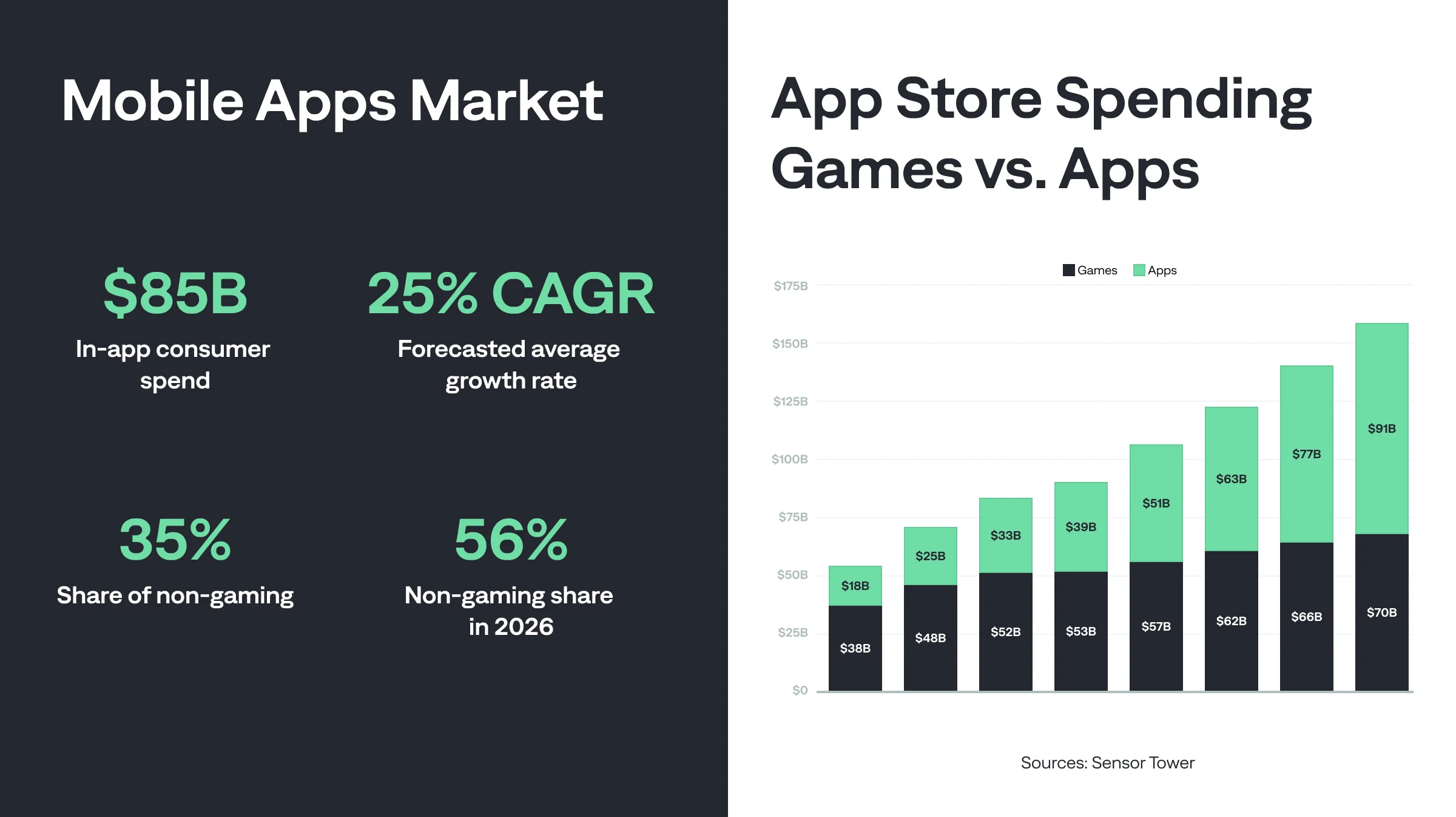
In such a thriving market selling an app sounds easy but so many questions pop up:
- How can you prepare your app to sell it?
- How do you sell an app online?
- How much money can you make selling an app?
- How much does it cost to sell an app?
- How can you sell an app to a company?
- How do you sell an app to a publisher?
- Should I use a broker’s agency?
- Where can I sell apps?
- Who buys apps?
- How do I start selling an app?
This article will guide you through everything you need to know about how to sell apps online with the best deals possible.
Getting Ready to Sell an App
1. Make sure that your app is eligible for an app transfer
Before you sell an app, it's important to make sure it's fully prepared for a smooth transfer to a new owner. Selling an app involves moving it to another developer's account, but not all apps are eligible for this transfer. Here's what you need to ensure:
- App Status: Your app must have at least one version that is released and falls into one of these categories: Ready for Sale, Prepare for Submission, Developer Removed from Sale, Invalid Binary, Developer Rejected, or Rejected.
- Entitlements: Ensure that none of your app versions use iCloud or Passbook entitlements, as these can complicate or prevent the transfer.
- Agreements: Double-check that you've accepted the latest versions of both the paid and free app agreements in your App Store Connect account.
Apple's website provides a comprehensive list of transfer criteria, which will help you verify if your app is ready for sale. Remember, while Apple facilitates the transfer process, it doesn't assist with finding a buyer or managing the sale itself. You can see all the transfer criteria on the Apple transfer criteria page.
>
Q: Can I ask Apple to help me? Do I have to inform Apple about selling my app?
A: The answer to both of these questions is no. Apple doesn’t have any products to assist you in the buying or selling your app. The only thing you have to do is transfer the app to the buyer, and that’s all.
2. Switch to a subscription revenue model (optional)
From my experience, subscription-based apps are more appealing to buyers. As Sensor Tower highlights, global subscription app revenue from the top 100 subscription apps has climbed 34% Y-o-Y to $13bn, which is a $3.3bn increase since 2019. Although subscription apps offer multiple revenue opportunities (you can combine subscriptions with ads or one-time in-app purchases), there are a couple more reasons that make subscriptions highly attractive to investors.
First of all, due to their very nature, subscription apps provide more reliable income. Businesses (and your investors) can predict future revenue.
Secondly, it tends to be much easier for subscription apps to engage users, as they will want to get as much value out of their subscription to the app as they can. When it comes to investing in something, it is most probable that the investor has already done their research beforehand to ensure the app meets their requirements.
3. Strengthen Your Revenue Infrastructure
When you're figuring out how to sell apps online, one of the first things potential buyers will ask about is the stability of your revenue infrastructure. Think of it like a house: if the roof has a leak, it’s going to cost a lot more to fix later than if you built it right the first time. Investors are the same way—they want to know if your revenue setup is solid and easy to maintain before they commit.
To make your app more appealing, your subscription monetization infrastructure should:
- Handle all possible subscription scenarios—like tracking different in-app products and prices, planning changes, managing downgrades or upgrades, and detecting billing issues.
- Accurately track all subscription events with server-side receipt validation.
- Implement cross-platform subscription management to deal with subscribers across Apple, Google, and even the web.
- Offer tools for data management and easy integration with marketing and product platforms.
- Be easy to transfer to a buyer without needing a full-time engineer to manage it.
While you could build this infrastructure yourself, it’s often not worth the time and resources. Instead, using a service like Qonversion can streamline the process with just a few lines of code, freeing you up to focus on growing your revenue. For example, one of our clients, Fitita, a dieting app, spent over six months trying to build their subscription infrastructure in-house. Eventually, they switched to Qonversion, which allowed them to concentrate on revenue growth and led them to startup accelerator Y Combinator.
Remember, investors will closely examine the budget required to maintain and scale your technology stack. Making sure your infrastructure is stable and scalable is key to getting the best deal when selling your app.
How to Sell an App for the Best Price
Figuring out how to sell applications online and how to increase your app’s valuation is not an easy process. There are so many factors to consider, and the truth is, you won't know the exact value until you dive into the numbers and start negotiating. But don't worry— I’ve got some tips to help you come up with a solid figure that you can confidently put on the table.
One tried-and-true method to estimate your app’s value is to look at a 1 to 5-year forecast or multiply your monthly net revenue by 12 to 60. Net revenue is what’s left after Apple takes its cut. For instance, if your app brings in $5,000 a month organically (no marketing expenses) and the churn rate is balanced by new subscribers, you can start negotiating with a valuation of $300,000 ($5,000 x 60).
If the buyer thinks your price is too high, it's up to them to explain why. Don’t hesitate to start with a higher price—it helps you see what buyers are really willing to pay.
Here are a few things to consider when setting your price:
- Uniqueness: Is your app based on a template or does it offer something truly special? Unique technology usually commands a higher price.
- Organic Installs: If you have 1 million installs per month but only $5,000 in revenue, there's a massive potential for revenue growth with the right monetization strategy.
- Revenue Leverage: Can you easily boost your app’s revenue? If so, either include that potential in your offer or act on it to raise your selling price.
- Churn Rate: Apps with low churn rates are gold. They not only hold higher value but also make it easier to predict the lifetime value (LTV) of your subscribers, which can significantly bump up your app’s price.
And here’s a final tip: keep an eye on what other apps are being offered for. This can give you a benchmark and help you position your app in the market.
By considering these factors, you’ll be in a strong position to negotiate and secure the best price when selling an app.
Key Growth Metrics to Sell an App for the Best Price
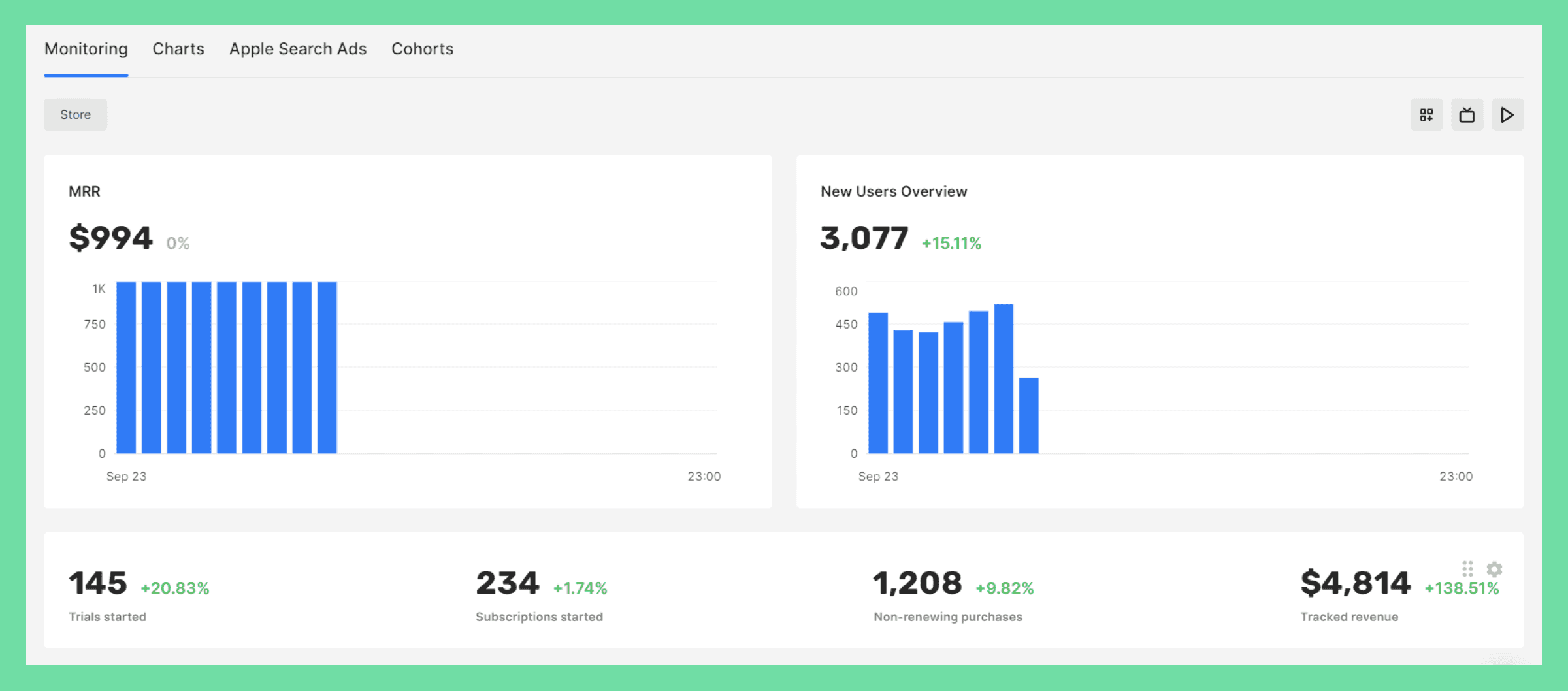
When it comes to selling an app, your ability to clearly communicate your financial and growth metrics is crucial. These are the numbers that will help convince investors to either fund you or buy your app. You should be well-versed in these metrics, as they directly impact investor decisions.
Annual Recurring Revenue (ARR)
ARR represents the total value of all active subscriptions at a given point in time, and is typically calculated on an annual basis.
Monthly Recurring Revenue (MRR)
MRR refers to the amount of revenue your company expects to generate every month.
Lifetime Value (LTV)
This is how much revenue you get on average from a subscriber. You can also have metrics like 1-year LTV, 2-year LTV, and others. You should focus on maximizing the LTV and make sure that it is higher than your subscriber acquisition cost so that your app can grow profitably.
You can easily track your historical LTV with the Qonversion cohorts dashboard.
Churn
First and foremost, it is important to have accurate data that can distinguish between voluntary and involuntary churn. Involuntary churn happens when, for example, the user’s payment information on the App Store is not up to date and Apple simply can not complete the charge. Voluntary churn is when a user makes a conscious decision to cancel a subscription.
Once you have accurate data that shows why users have canceled, you can then use this data to automate customer communication. This can be through measures such as reminding users with billing issues to update their payment information, as well as polling users who cancel voluntarily to understand what is driving the churn so you are then in turn able to address it.
Qonversion tracks data from all subscription statuses, such as billing issues, and cancellations.
And you can quickly set up push notifications or use webhooks to build any custom logic on your side to create win-back campaigns.
Visibility in the App Store and Google Play
Some investors look at your App Store and Google Play rankings, and the nature of the traffic. To boost your organic reach, consider using tools like AppFollow or AsoDesk to measure and improve your visibility. A smart strategy involves investing in Apple Search Ads, which can lead to a noticeable increase in organic traffic. The more users you attract through Search Ads, the more Apple rewards you with organic growth.
Remember, when learning how to sell applications online, organic traffic is gold. Investors prefer apps that can drive installs without relying heavily on paid advertising, so ensuring your app’s visibility through organic means can significantly increase its attractiveness and value.
How and where to sell an app?
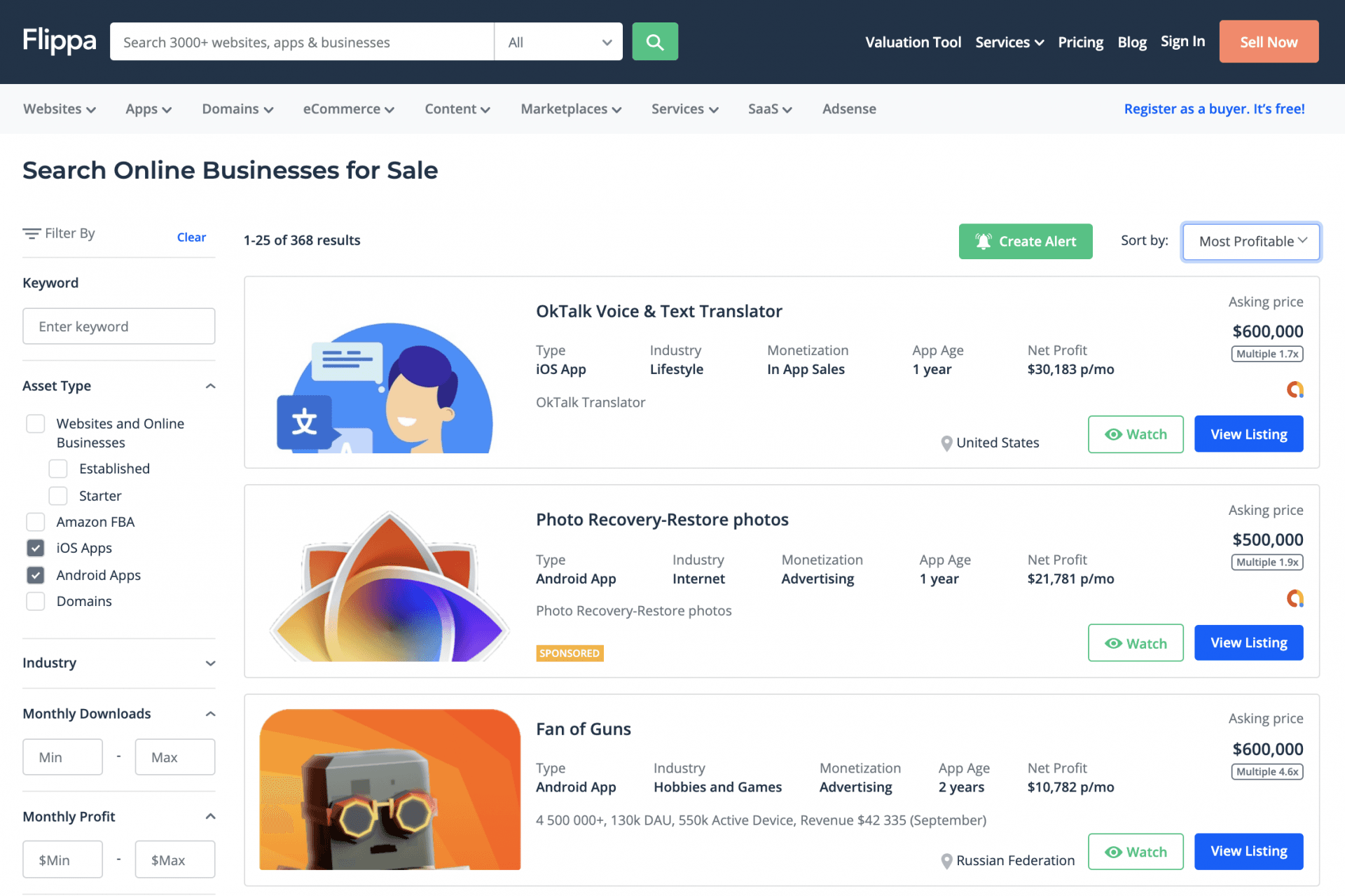
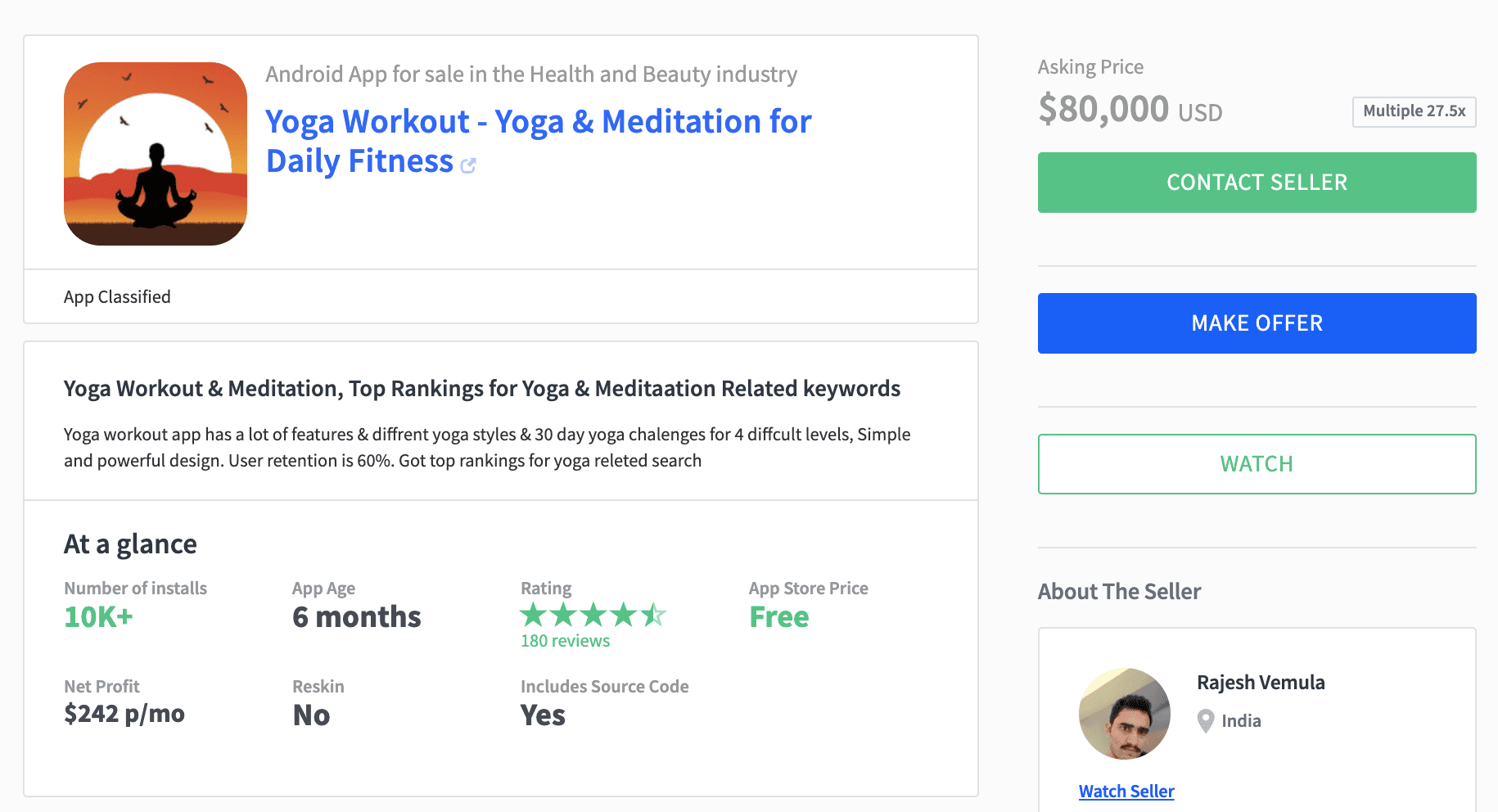
Following all the steps mentioned above, I can say that you are now ready to list your app on different marketplaces and send it directly to buyers. Below are a few websites where you can sell your app:
I personally had experience with Flippa and had a quick conversation with Appbusinessbrokers.
Also, it’s worth checking out the following websites:
- https://maplemedia.io/acquisitions
- https://webuyapps.top
- https://prometheusinteractive.com
- https://appsbuyout.vc
How to sell an app to publishers
If you're feeling stuck with your app or game and aren't sure how to make it grow, selling to a mobile app or game publisher might be the perfect solution. There are plenty of publishers out there who would want to partner with you and help your app reach its full potential while sharing the success together.
How does this work?
- You do what you know — build great apps or games.
- Publishers invest their expertise and marketing sources to grow your app or game.
- They then pay you a share of the revenue created.
Sounds like a win-win, right? Here are a few companies I’ve had experience with:
- The accelerator program run by Appodeal (Monetization and mediation platform).
The publishing studio, Lion Studios by AppLovin (Advertising and monetization platform).
How to Sell an App to Investors?
To attract big publishers and sell an app to investors or app acquisition companies is a complex but rewarding nevertheless. Many investors are on the lookout for apps with growth potential, willing to invest in user acquisition to significantly boost revenue. For instance, Bluethrone is a company that specializes in investing in apps to elevate them even further.
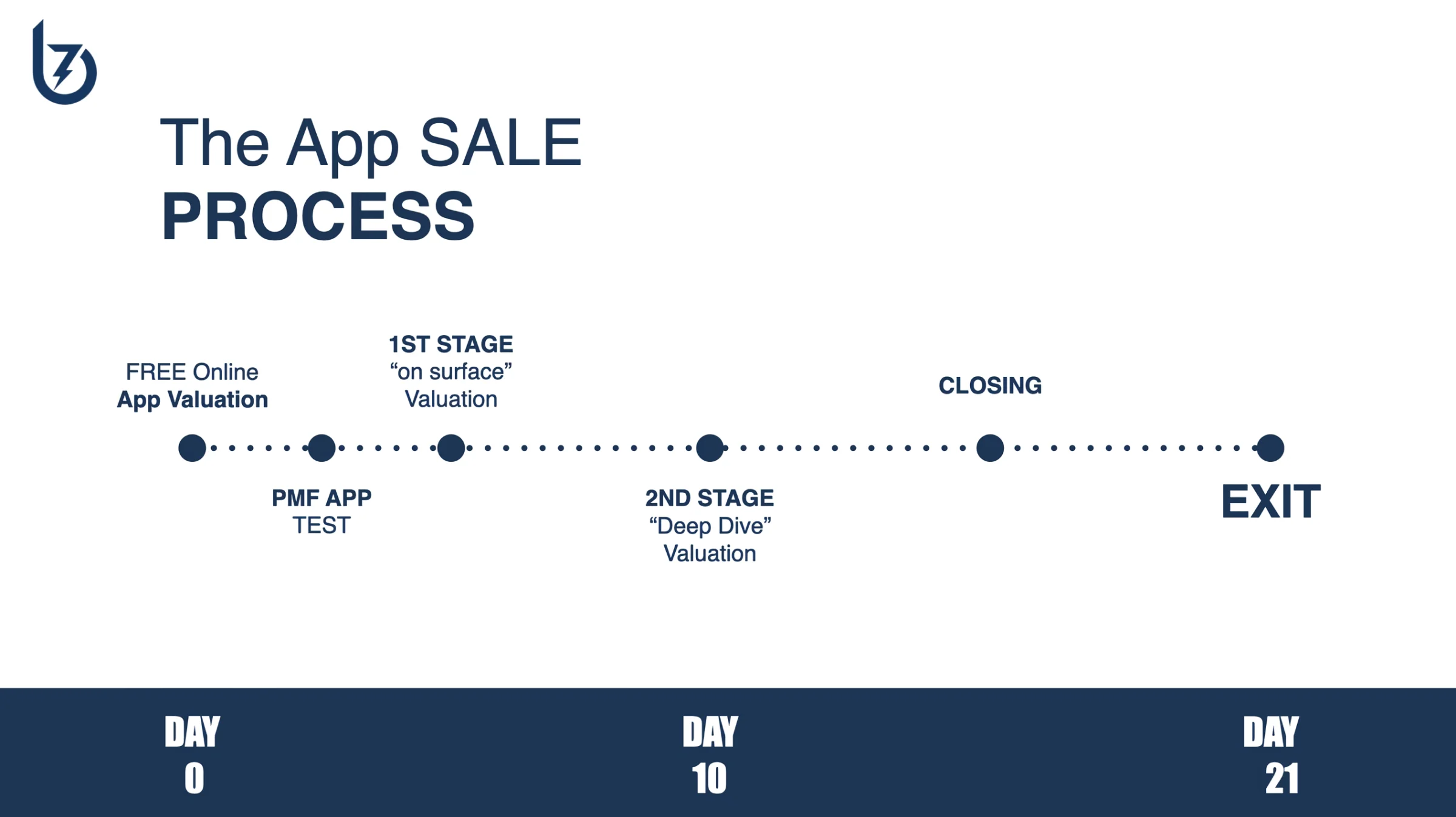
Typically, the process takes about a month or two and involves several stages:
- Initial Contact: Reach out to an app acquisition company.
- App Valuation Process: This can take up to 21 days and begins with a light evaluation of your metrics.
- Deep Valuation: You’ll receive an official offer, and this is your chance to decide whether to sell or improve your app first.
- Negotiations
- Finalizing the Deal
How to Negotiate the Best Conditions When Selling an App?
The one thing that should be emphasized is that you should always remember that the best person to protect your interests is you! If your app has a great idea, and you know your app economics, understand each metric and they are all optimized, then your app will sell itself.
However, you may struggle with the negotiation and selling stages. In this case, you can hire a broker who knows how to sell an app. They could help you audit your app, prepare it for sale, present your app to potential investors and a wide database of buyers, and also help you to negotiate and even transfer your app. One of the pluses of hiring a broker is that with their help you can receive a number of offers in a short period of time so you can compare and choose the best one. As a reward for their help, they could take between 10-15% of the price which they sell/list your app.
Due DiligenceOnce you've struck a deal to sell an app, get ready for the next crucial step: due diligence. This is when the buyer dives deep into your app’s data, checking metrics like Daily Active Users (DAU), Monthly Active Users (MAU), and your subscriber base. It might sound overwhelming, but tools like Qonversion make the process much simpler. You can gather all your subscriber data in one place and even link it to platforms like Amplitude or Mixpanel to provide the buyer with a wealth of information. This preparation will help ensure a smooth and successful sale. Well, if you made it this far, thank you! It was a long article, but we’ve covered all the essential information you need. Hope it was helpful, and if you need further assistance or have more questions, get in touch.

Michael
CEO at Qonversion
Michael leads Qonversion with a vision to help mobile apps maximize their subscription revenue.