Navigating Apple's in-app purchase subscription fees can be a bit complicated, but rest assured—you're not the only one who feels that way. Similar to any other marketplace, the App Store charges a commission on subscriptions and in-app purchases, and this fee is a significant part of developers’ unit economy. But here's the good news: there are ways to reduce that commission and increase your LTV (Lifetime Value). In this article, we will break down when you can expect those Apple payouts to hit your account, and much more. So, let's get into it and uncover some strategies to help you make the most of your app revenue!
Apple In-App Purchase Fee
As it is stated on the Apple website, 84% of apps are free, which means Apple does not earn a penny except the $100 developer enrolment fee. This means that, like in any fair marketplace, developers decide how many products there are. The only thing Apple requires is for developers to price their products according to their price tiers at an average interval of one dollar.
Apple In-App Purchase Commision
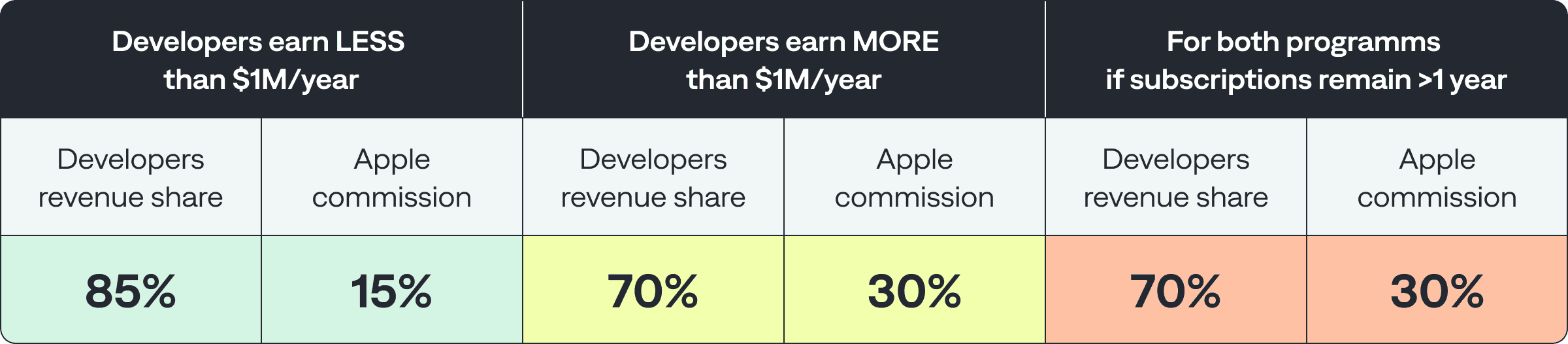
Whether through in-app purchases or subscriptions, there are different ways developers can generate revenue from their apps on the App Store. One thing that remains consistent is that developers generally keep 70% to 85% of their earnings, while Apple claims a 15% to 30% share.
Yet this was not always the case with Apple, as before 2021, Apple operated on a 70/30 revenue share model across the board. But in late 2020, they introduced the App Store Small Business Program, which was a game-changer for a lot of developers. Even in 2024, this shift is still hugely relevant and worth understanding as it allows developers earning less than $1 million a year to qualify for a reduced 15% commission rate.
Apple In-app Purchase Commission Table
Apple In-App Purchase Percentage
Another condition that might benefit you is that developers earn 85% from subscriptions that remain for over a year. This rule applies to both regular and App Store Small Business Program subscriptions.
Items Not Subject to Apple's In-App Purchase Fee
The Apple in-app purchase subscription fees are only applicable to digital goods and services, which means they do not cover physical items such as purchases made through the Amazon app, food deliveries from DoorDash, or real-world services like Uber rides.
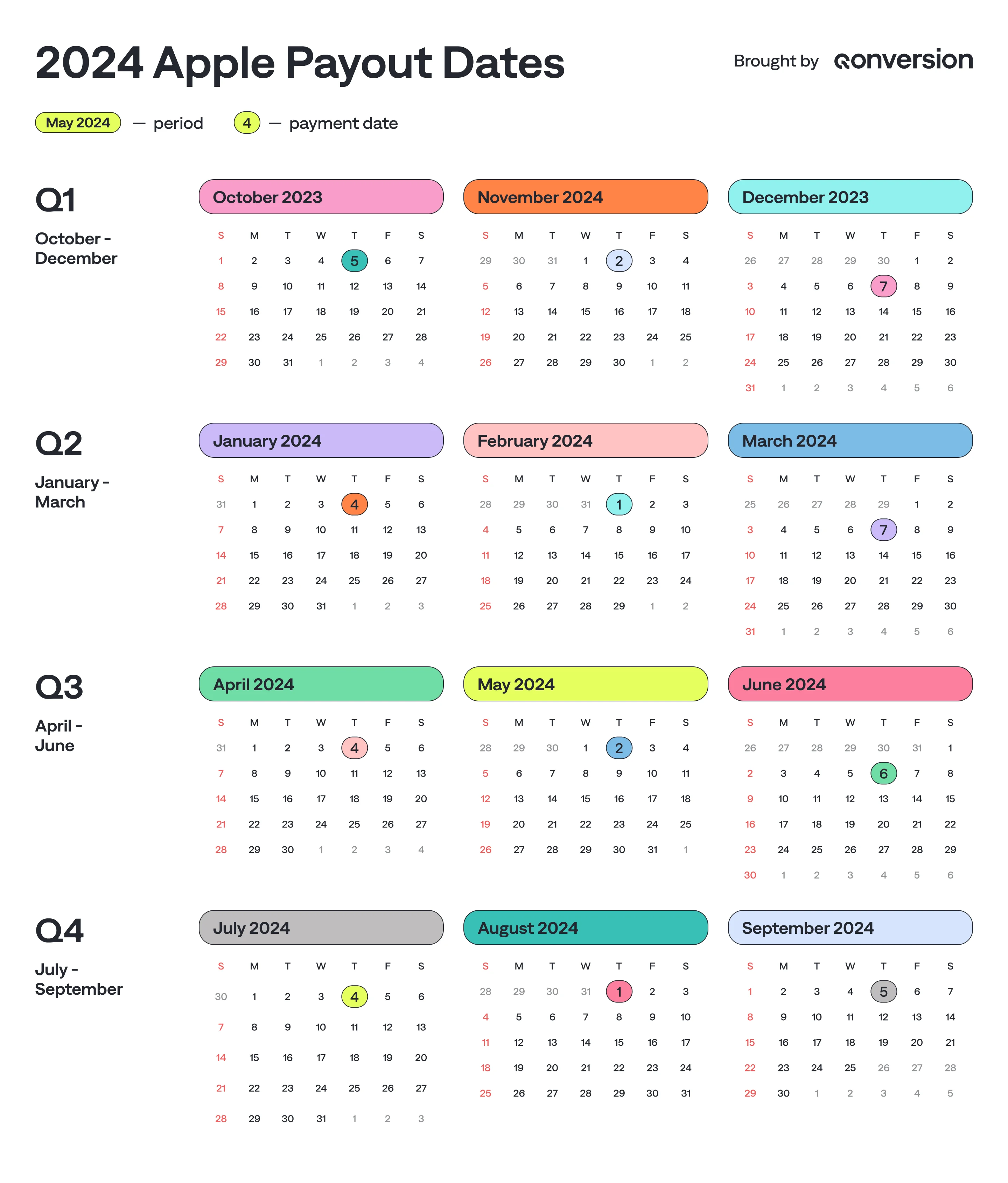
Apple Fiscal Calendar
Apple’s payment calendar is tricky, so it is understandable if you get confused about your estimated payment date. We wrote a complete guide to help you understand how it works and added the Apple fiscal calendar. Here's the most recent Apple Fiscal calendar:
Frequently Asked Questions on App Store Comissions
Q: What is the standard commission fee Apple charges on in-app purchases?
A: The Apple in app purchase charges a 30% commission on in-app purchases and subscriptions. However, there is not an apple in-app purchase fee for physical goods or services.Q: Is there an upfront Apple in app purchase fees for developers to list their apps on the App Store?
A: Yes, developers must pay a $100 annual Apple in app purchase fee to enroll in the Apple Developer Program, which is necessary to list apps on the App Store.Q: How can I reduce the commission fee Apple charges on my app?
A: You can be eligible for an apple in app purchase cut which goes up to 15% if you are qualified for the App Store Small Business Program. It is available to developers who earn less than $1 million during the calendar year. Additionally, maintaining a subscription for more than a year also qualifies you for the reduced rate.

Michael
CEO at Qonversion
Michael leads Qonversion with a vision to help mobile apps maximize their subscription revenue.