A/B testing is one of the most powerful tools for optimizing your app’s monetization, but it’s also one of the most misunderstood. During our latest webinar, we covered some of the most effective A/B testing strategies, how to formulate strong hypotheses, the two key types of tests, and real-world examples of what works.
We also discussed common mistakes that app developers and marketers make when they start A/B testing—and how to avoid them.
In this article, I’ll walk you through the key insights we discussed. I hope these come in handy. If you think I can help you grow your app, feel free to ping me.
Start your A/B test with a Strong Hypothesis
A/B testing isn’t about randomly changing things and hoping for the best. If you don’t start with a clear hypothesis, your results will be meaningless.
Here’s a simple formula to follow:
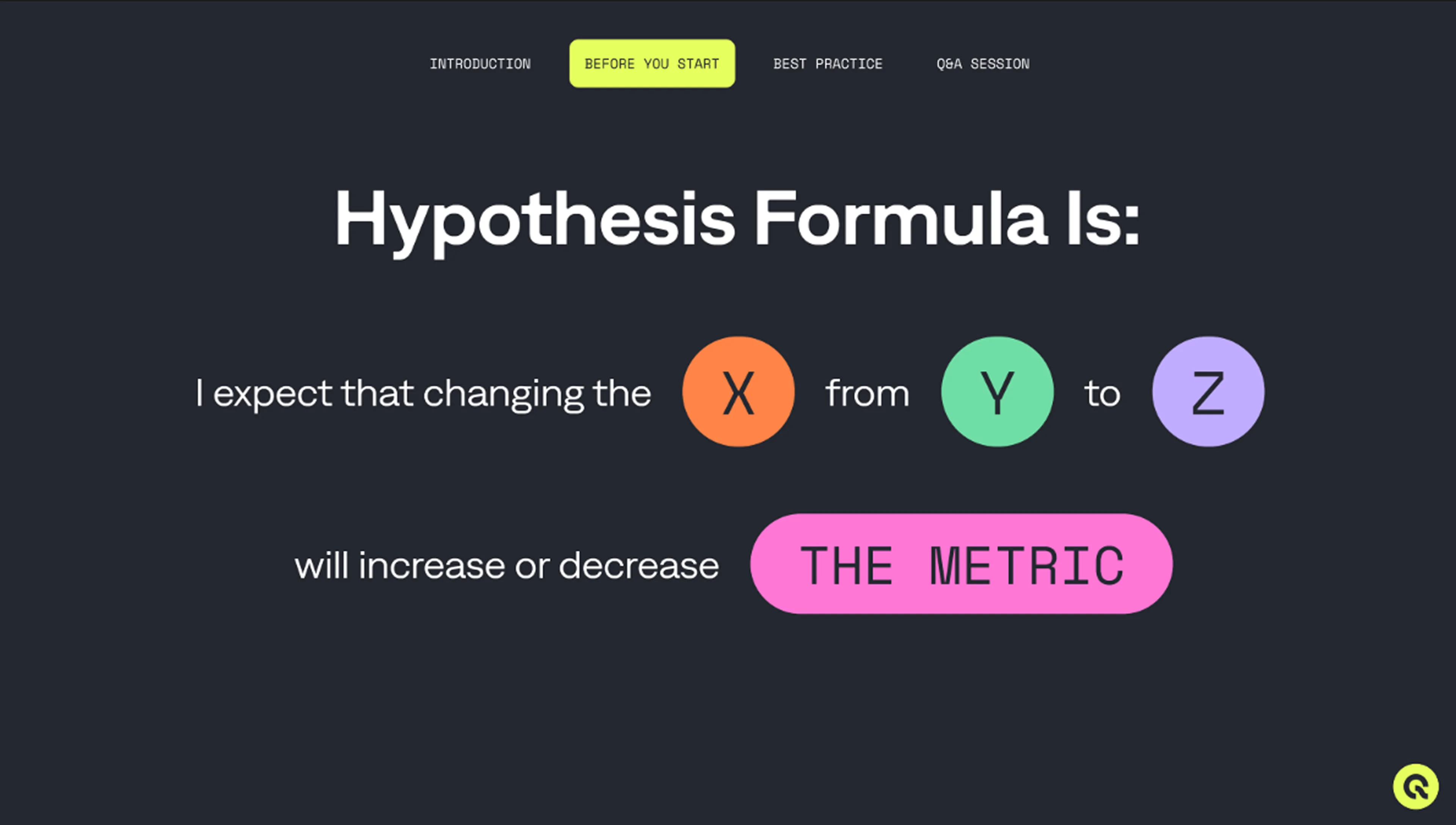
I always recommend keeping a separate document for all your A/B test ideas. Let your team add ideas freely, then filter through them to prioritize the most impactful ones.
- A simple CTA button change might seem small, but it could also impact renewals, cancellations, churn, and overall revenue.
- If you only look at trial conversion and ignore retention, you might be making decisions that boost short-term numbers but hurt long-term revenue.
The reality is, we don’t always know what will work best — that’s why we test. But making data-driven decisions means looking at the full picture, not just one isolated metric.
Two Types of A/B Tests (And Why This Matters)
Over the years, I’ve developed a simple framework for A/B testing in mobile apps. I divide tests into two categories, which helps with risk management and ensures that experiments are structured properly.
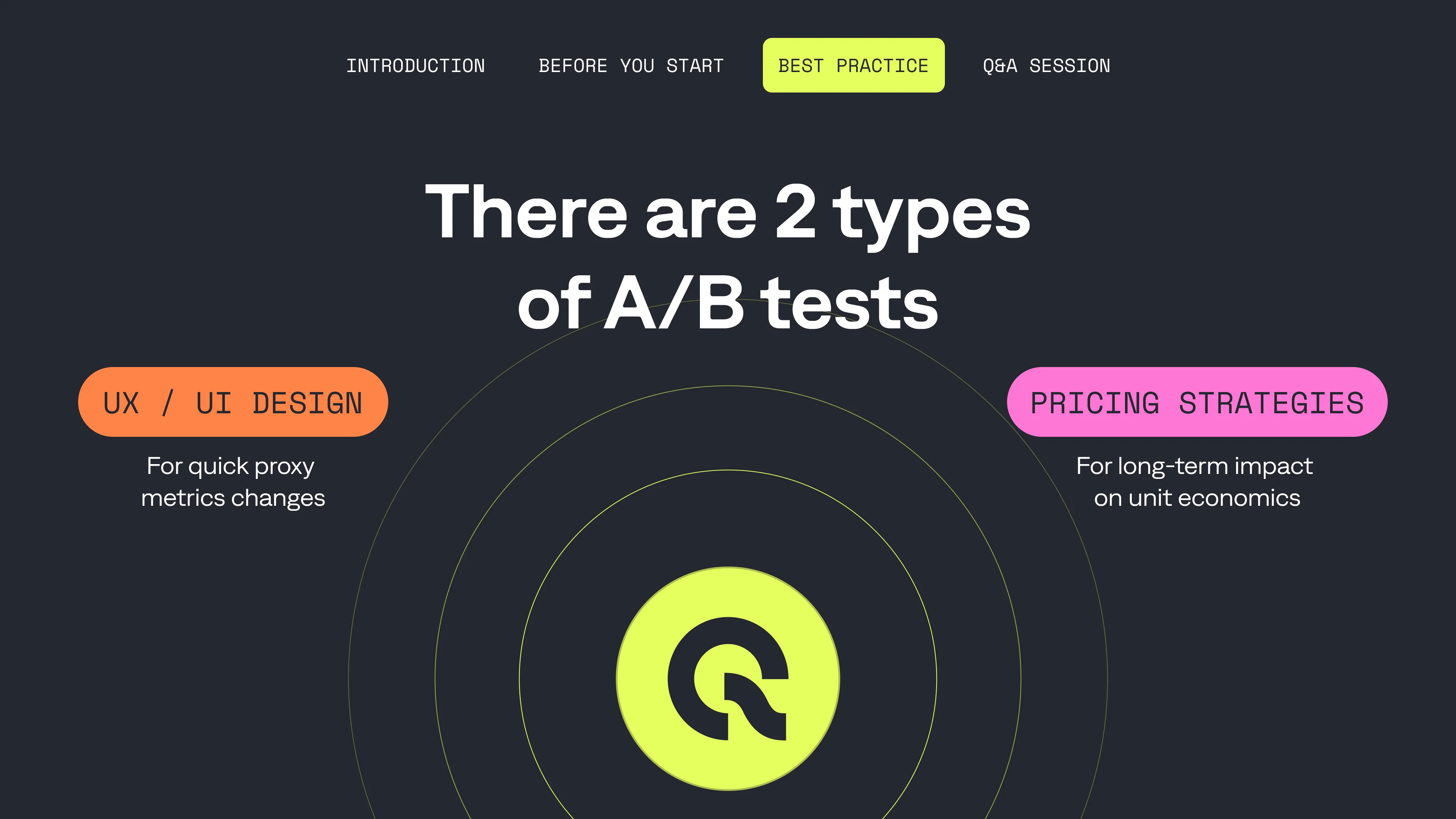
1️⃣ Pricing Tests – Long-Term Economic Impact
Pricing tests are among the most critical and risky experiments you can run. A small pricing adjustment can change the entire unit economics of your app, impacting user acquisition costs, retention, and lifetime value (LTV).
Because of this, I only recommend pricing tests if your app already has a strong understanding of its unit economics. If you’re not confident in how your customer acquisition costs (CAC) compare to LTV, making big pricing changes could hurt your business more than help it.
Pricing experiments also take longer to yield meaningful results since they require enough time to track renewals, churn, and long-term user behavior. Unlike UI/UX tests, where you can see results within days, pricing tests may take weeks or even months to evaluate properly.
2️⃣ UI/UX Tests – Quick Wins with Proxy Metrics
UI/UX tests, on the other hand, are faster to implement and analyze. These experiments focus on elements like onboarding screens, paywalls, CTA buttons, messaging, and app layout.
Changes in UI/UX can have an immediate impact on key proxy metrics such as trial conversion rates and engagement. However, they don’t always lead to long-term revenue growth. For example, increasing trial conversions might not necessarily result in higher LTV—if those users churn faster.
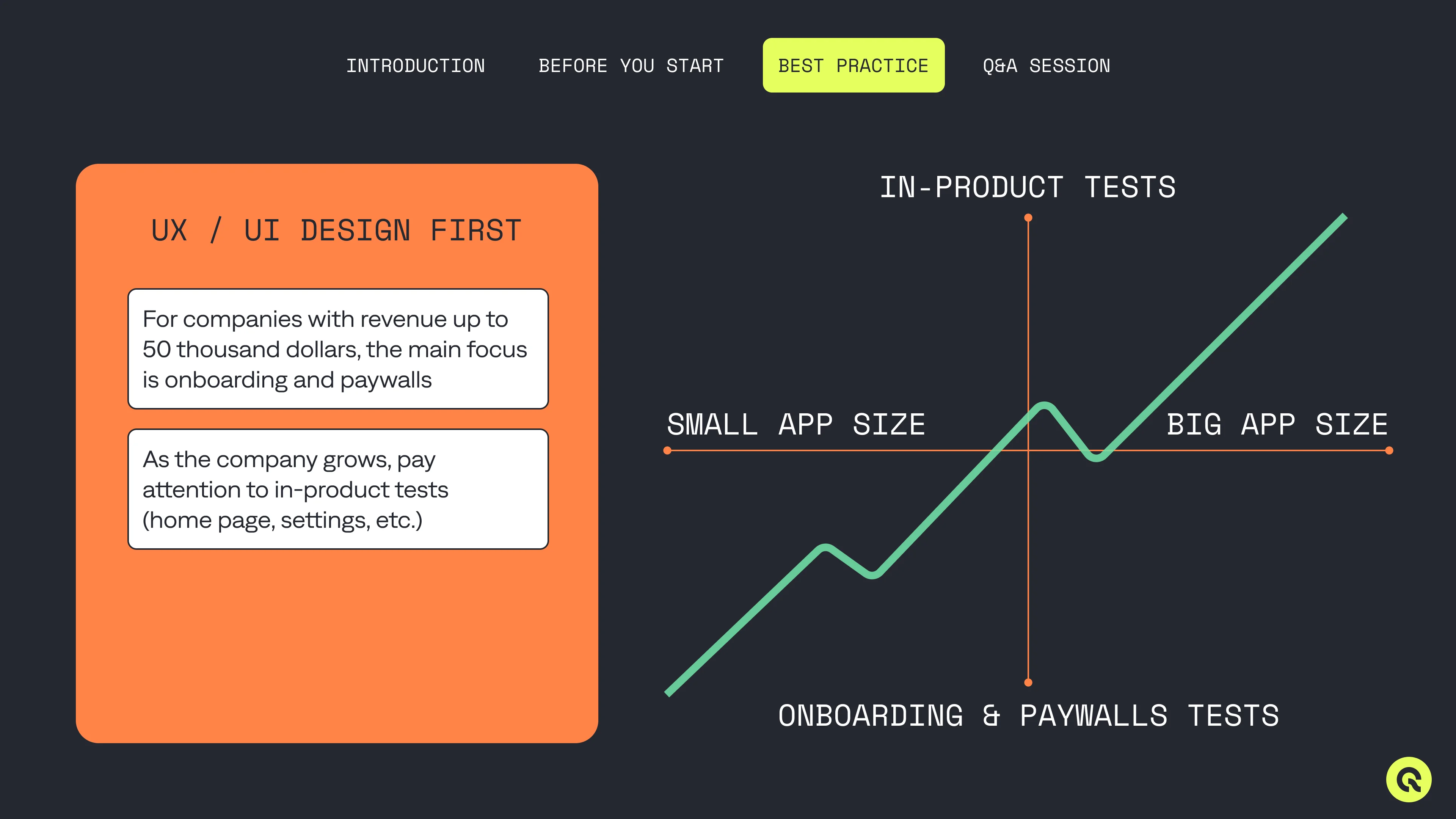
That’s why both types of A/B tests are important, but they should be used at the right stage. Newer apps should focus on UI/UX first, while established apps can explore pricing experiments once they understand their business model.
Where to Start? UI/UX Tests First
For apps earning less than $50K per month, the best place to start is with UI/UX tests, particularly in onboarding and paywalls. These elements are crucial because every single user interacts with them. Unlike deeper in-app features, where engagement varies, onboarding and paywalls affect almost all of your potential customers.
Optimizing Onboarding: What to Test?
Onboarding plays a huge role in first impressions and ultimately influences how many users convert to paid subscribers.
Some of the most important aspects to A/B test in onboarding include:
- Screen sequence and number of steps: Should onboarding be short and simple, or should it be longer with more guided steps?
- Messaging and tone of voice: Does a formal, data-driven tone work better, or do users respond more to casual, friendly messaging?
- Forms, buttons, and visual elements: Should CTA buttons be larger, a different color, or placed differently on the screen?
Some app owners believe that users should try the app first before seeing pricing, but in reality, payment is part of the product experience. If your app requires users to input personal data (like age, weight, or preferences), it’s more transparent to show the pricing upfront rather than surprise them later. And that’s one of the biggest mistakes I see app developers make — delaying the paywall until later in the user journey. Why is this a mistake? Because 60–80% of all trials happen during onboarding. If you don’t show users the paywall early on, you risk losing a massive chunk of potential revenue.
Common A/B Testing Mistakes (Avoid These!)
A/B testing can be incredibly powerful, but only if it’s done correctly. I often see app developers make the same mistakes, which lead to misleading results and wasted time.
Here are some of the most common pitfalls:
No clear hypothesis
We’ve covered this above. If you don’t define exactly what you’re testing, your results will be meaningless. Always structure your hypothesis properly.
Too many changes at once
I think this stems from hypothesis formulation. If you know what you’re testing, you’re laser focused on one change - one metric. However, if you modify multiple elements simultaneously you won’t know which change caused the result.
Improper user segmentation
New vs. returning users behave differently, so don’t mix them in the same test group. One of our developers covered user segmentation for app A/B testing in great detail, check that out.
Insufficient sample size
Running tests with too few users leads to unreliable conclusions. I found an industry benchmark that suggested 2000 users per group. This means that to complete the test in 10 days you will need around 400 every day. The sample size really depends on your niche and your user base but running A/B tests with few users just makes no sense.
Short test duration
If you stop a test too soon, you might miss the real impact of the change. Make sure you avoid some seasonal changes, pause and resume the A/B test as needed to get statistically significant results.
Key Takeaways
A/B testing is a continuous process — not a one-time fix. The most successful apps constantly test, iterate, analyze, and refine their strategies. Here are the key points we’ve covered.
- If your app is still in the early stages, focus on UI/UX experiments first, especially onboarding and paywall optimization.
- Once you’ve stabilized your business model, you can experiment with pricing changes to fine-tune your revenue strategy.
- Use remote configs to dynamically adjust your onboarding and paywall sequences without requiring new app updates.
- Track multiple metrics beyond just conversion rates to get a full picture of user behavior.
And most importantly — keep a backlog of your test results. Something that didn’t work today might become your biggest win six months from now.
If you want to dive deeper into the examples we discussed on the webinar, check out the full recording. Happy testing! 🚀

Sam Mejlumyan
CEO of Qonversion
Sam is an entrepreneur and CEO of Qonversion – the in-app purchase platform which processes over $1 billion tracked revenue yearly. With deep expertise in subscription management and a passion for driving data-driven strategies.